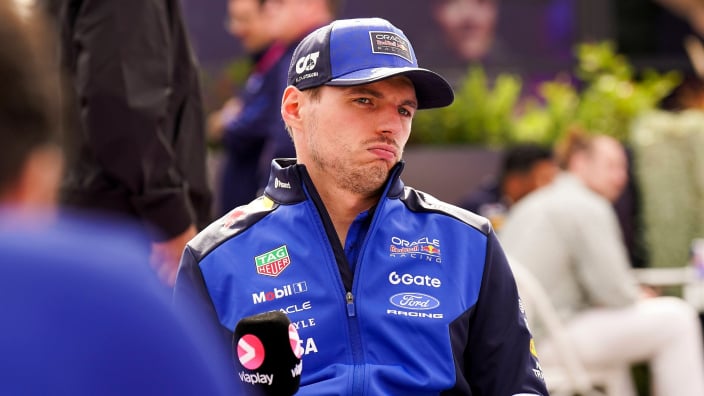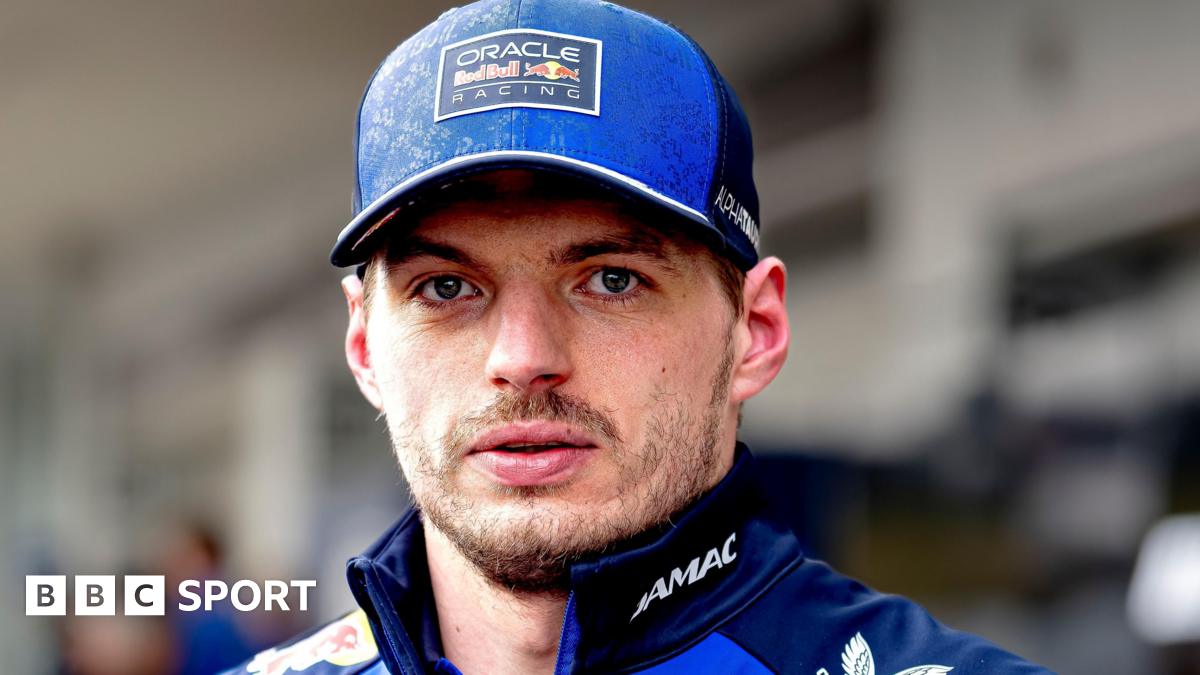
The telemetry suggests that when your race engineer of seven years announces his departure and you immediately declare it “won’t affect my future decisions,” you’re either demonstrating remarkable emotional detachment or executing phase one of the most transparent exit strategy since Sebastian Vettel started collecting helmet designs in 2020.
Max Verstappen’s response to Gianpiero Lambiase’s impending departure reads like a masterpiece in strategic communications. The three-time world champion has assured everyone that losing his primary voice of reason—the man who’s talked him through countless moments of, shall we say, spirited feedback—will have absolutely zero bearing on his own career choices. Which is rather like claiming your decision to leave a restaurant has nothing to do with the chef walking out mid-service.
Red Bull team principal Christian Horner, demonstrating the kind of confidence typically reserved for explaining why you’ve put both drivers on hard compounds in Monaco, insists that Verstappen remains completely unaffected by this development. “Max is focused entirely on his racing,” Horner explained, presumably while updating his LinkedIn profile and refreshing his contacts at Mercedes.
'GP and I have discussed this extensively. Whatever happens next, we understand each other perfectly.'
— Verstappen, sounding suspiciously like someone with a plan
Reconstructed from memory. And by memory, we mean imagination.
The timing proves particularly fascinating. Lambiase’s announcement comes precisely as Verstappen finds himself wrestling with Red Bull’s 2026 regulations struggles, watching Kimi Antonelli lead the championship in a Mercedes, and observing his former teammate Sergio Perez enjoying what appears to be a mid-life crisis renaissance at Cadillac. One might suggest this represents something of a perfect storm for career reevaluation.
Industry insiders note that Verstappen and Lambiase’s partnership has evolved beyond the typical driver-engineer relationship into something resembling a marriage counselor helping someone work through their anger management issues. Lambiase’s departure removes not just technical expertise, but the one voice capable of delivering “Max, you need to calm down” with the authority of someone who’s survived seven years of Dutch directness.
The strategic brilliance lies in the messaging. By positioning Lambiase’s exit as irrelevant to his own future, Verstappen creates the perfect cover story for his own departure. When he eventually announces his move—whether to Mercedes, Ferrari, or a sudden desire to try his hand at IndyCar—he can point to this moment as evidence that personnel changes simply don’t factor into his decision-making process.
'The team structure remains solid. Max knows he has everything he needs here to compete at the highest level.'
— Horner, practicing for his eventual "we wish Max well in his future endeavors" statement
This quote has been neither confirmed nor denied. Classic F1.
Meanwhile, Red Bull’s current championship campaign continues its fascinating journey toward mediocrity, with Verstappen managing a mighty fourth place in Australia followed by what can generously be described as “participation” in subsequent rounds. The car’s struggles with the new regulations have transformed the once-dominant team into something resembling Aston Martin’s strategic decision-making process—technically functional, but missing that certain je ne sais quoi that separates winners from also-rans.
The broader implications extend beyond Red Bull’s immediate concerns. Verstappen’s calculated indifference to his race engineer’s departure signals a driver who’s mentally already begun the process of evaluating alternatives. When someone spends seven years building a professional relationship and then dismisses its dissolution as irrelevant, they’re either demonstrating sociopathic tendencies or engaging in some rather sophisticated reputation management.
Perhaps most tellingly, the initials “GP” taking on new meaning in this context—from Gianpiero to “goodbye please”—represents the kind of cosmic irony that Formula 1 specializes in delivering. One imagines future historians will appreciate the symbolism of a race engineer whose departure spelled out his own farewell message.
As the Canadian Grand Prix approaches, Verstappen’s position becomes increasingly interesting. He’s publicly committed to Red Bull while privately watching his support structure dismantle itself with the efficiency of a Williams pit stop. His insistence that personnel changes won’t influence his future reads less like confidence and more like someone who’s already made their decision but hasn’t quite figured out the optimal timing for the announcement.
The championship battle continues its relentless march toward what appears to be a Mercedes-Ferrari duopoly, with McLaren’s Norris demonstrating that defending a title with an uncooperative car proves rather more challenging than winning one. Verstappen finds himself in the peculiar position of being both the sport’s most successful current driver and increasingly irrelevant to its immediate future—a situation that tends to focus the mind wonderfully on alternative career options.
Red Bull’s response to this developing situation will prove fascinating to observe. Teams rarely admit that losing key personnel affects their star drivers, even when said drivers begin exhibiting all the classic symptoms of someone updating their CV. The challenge lies in maintaining the illusion of stability while simultaneously preparing for what increasingly appears to be an inevitable departure.
One suspects that Verstappen’s future announcements will be worth monitoring with particular attention. After all, someone who claims their race engineer’s departure is irrelevant to their career planning is either remarkably pragmatic or remarkably prepared for their next chapter.