In 1976, when James Hunt triumphantly crossed the finish line at Fuji Speedway in torrential rain to claim his world championship, few could have predicted that decades later, F1 would become a traveling circus where circuits disappear and reappear with all the reliability of a Minardi gearbox. The sport that once treated venues like sacred ground now operates on a revolving door principle that would make a Las Vegas casino blush. Which brings us to Turkey’s latest attempt to rejoin the F1 calendar in 2027, armed with nothing more than fond memories and what appears to be a business plan scrawled on the back of a baklava recipe.
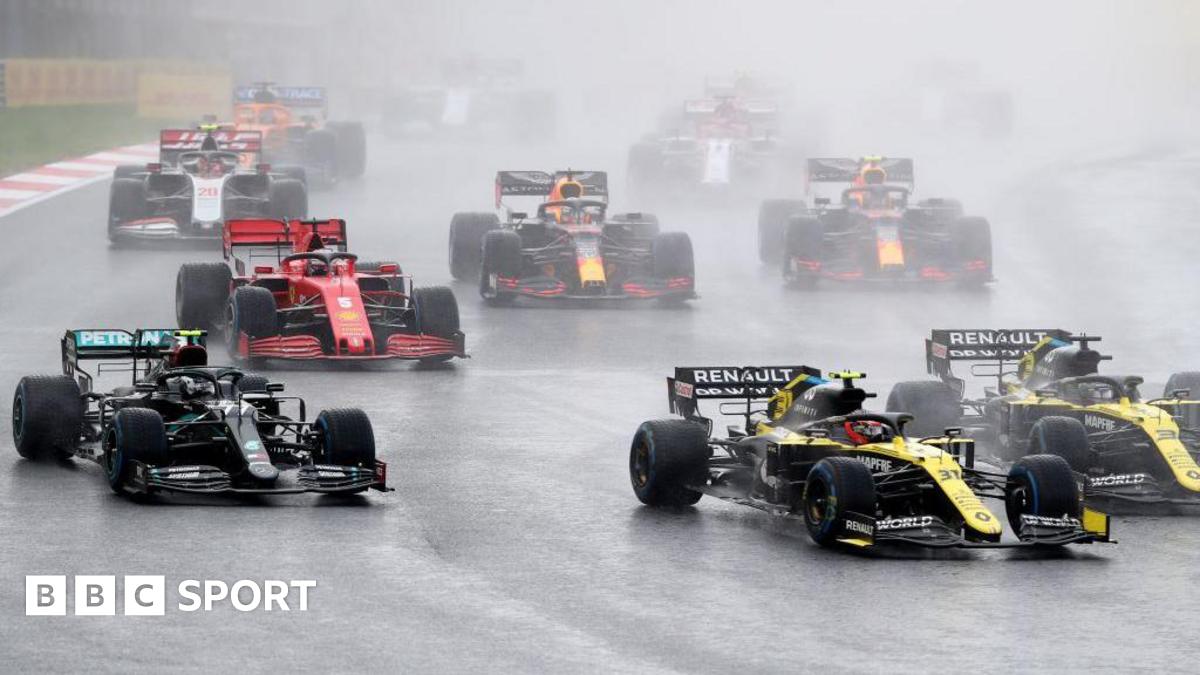
The Turkish Grand Prix, which graced our calendars sporadically between 2005 and 2020 before vanishing into the same dimensional void that swallowed Malaysia and Germany, has announced its triumphant return for 2027. This comes after a six-year hiatus during which Istanbul Park apparently spent its time contemplating the philosophical implications of Turn 8’s banking while the rest of F1 moved on to creating street circuits in locations where the primary qualification seems to be “has buildings and willing to pay Liberty Media’s mortgage.”
What’s particularly fascinating about Turkey’s confidence in securing their return is the apparent belief that F1 operates on some sort of loyalty points system, where past excellence in providing actual racing translates to future calendar inclusion. This would be charming if it weren’t so delightfully naive. The last time Turkey hosted a Grand Prix, Lewis Hamilton was still driving for Mercedes without a Ferrari contract clause, Max Verstappen wasn’t yet legally old enough to drink champagne in some countries, and hosting fees were measured in millions rather than the GDP of small nations.
'Wait, they want how much for hosting fees? I thought this was 2020 pricing'
— Turkish GP organizer, reality check
Unverified. Our paddock sources are unreliable at best.
The mathematics of modern F1 calendar politics would make a quantum physicist weep. With 24 races now considered the absolute maximum before drivers begin plotting rebellion and mechanics start forming unions, every returning circuit must displace an existing one. Turkey’s optimism suggests they believe their historical contribution to the sport’s greatest moments will somehow override the harsh reality that Jeddah writes bigger checks and asks fewer questions about human rights. The romantic notion that Istanbul Park’s flowing curves and elevation changes might triumph over Saudi Arabia’s corniche views and unlimited petrochemical budgets represents the kind of sporting idealism that died somewhere around the time Bernie Ecclestone discovered dictators paid better than democracies.
Modern F1’s relationship with geography has become increasingly abstract, treating the planet as a giant Monopoly board where the highest bidder gets to place their hotels on Mayfair. Turkey’s absence coincided with F1’s discovery that street circuits in oil-rich nations could generate more revenue than purpose-built facilities in countries where the local currency wasn’t backed by dinosaur remains. The sport that once celebrated Spa’s Eau Rouge and Suzuka’s 130R now gets equally excited about ninety-degree corners surrounded by concrete barriers and artificial marina views.
'Remember when we used to choose circuits based on racing quality? Those were simpler times'
— Liberty Media executive, moment of clarity
Decoded from aggressive helmet visor tapping.
The cruel irony is that Istanbul Park represents everything modern F1 claims to want but consistently ignores in favor of financial expedience. Hermann Tilke’s masterpiece provided genuine wheel-to-wheel racing, challenged drivers with its unique characteristics, and created moments that still feature in highlight reels fifteen years later. But in an era where Miami’s fake marina can command premium pricing and Las Vegas can shut down the Strip for a weekend, Turkey’s actual racing pedigree feels almost quaint, like bringing a sword to a cryptocurrency fight.
Turkey’s 2027 return announcement carries the confidence of someone who hasn’t checked their bank balance since 2020. The assumption that F1 will welcome them back with open arms suggests a fundamental misunderstanding of how Liberty Media operates, treating the sport less like a championship and more like a traveling entertainment franchise where the primary product isn’t racing but “experiences” that photograph well on social media. The gap between Turkey’s expectations and F1’s current reality is roughly equivalent to the distance between Turn 8’s apex and financial sustainability.
Perhaps most tellingly, Turkey’s announcement comes at a time when F1 has become so commercially successful that it can afford to ignore racing quality entirely. The sport that once needed Turkey’s dramatic races to maintain viewer interest now generates enough revenue from hospitality packages and sponsorship deals that actual competition has become almost secondary to the spectacle. Turkey’s belief that providing good racing will secure their calendar position represents a charming throwback to an era when sporting merit occasionally influenced business decisions.
The ultimate question isn’t whether Turkey deserves a place on the F1 calendar – they demonstrably do – but whether F1 deserves Turkey. The sport’s evolution into a global entertainment product has created a system where financial contribution trumps sporting heritage, where artificial lakes matter more than authentic racing, and where the countries willing to pay the most get priority regardless of what they offer in return. Turkey’s return would represent a rare victory for sporting romanticism over commercial pragmatism, which in modern F1 makes it about as likely as Fernando Alonso admitting he’s considering retirement.