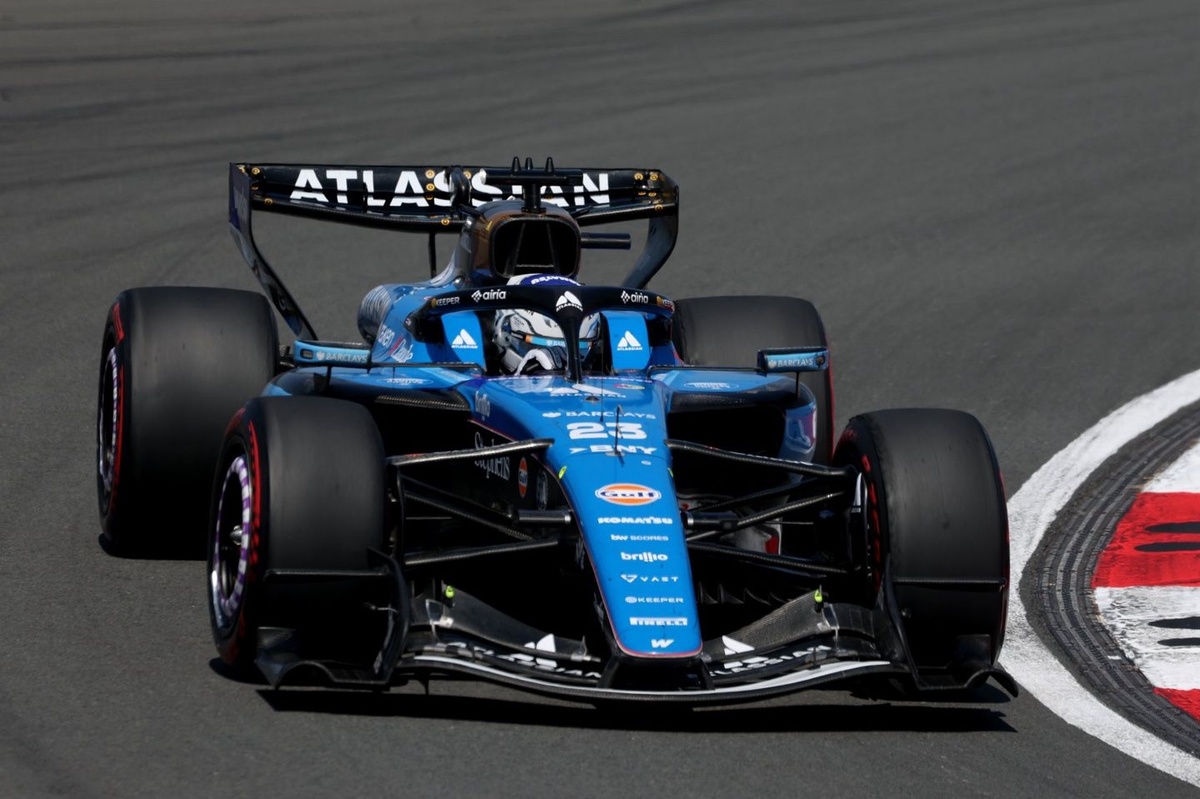
Suzuka International Racing Course, 14:07 local time, Turn 1 chicane. The evidence: Carlos Sainz guides his Williams FW48 through the opening sequence with the mechanical precision of a Swiss chronometer and all the memorable flair of a Tuesday morning commute. Final verdict: P8, one championship point, zero mentions in any subsequent driver performance analysis.
Ladies and gentlemen of the jury, I present to you the case of Williams Racing versus Sporting Relevance, wherein the defendant has achieved something genuinely impressive in modern Formula 1 — they have weaponized mundane competence to such devastating effect that their drivers can finish in points-paying positions while remaining completely invisible to the motorsport consciousness.
Consider the evidence from Suzuka. Oscar Piastri delivers a sublime drive through the field and earns universal praise in every driver rating publication from Autosport to your nephew’s F1 blog. Pierre Gasly extracts performance from his Alpine that defies both physics and Alpine’s 2026 development budget, rightfully earning plaudits across the paddock. Meanwhile, Carlos Sainz and Alex Albon execute drives of such methodical competence that they score points and then promptly vanish from all analytical discourse like they’ve been claimed by the Bermuda Triangle of motorsport journalism.
'We had good pace in the midfield, solid strategy, everything went to plan'
— Carlos Sainz, post-race Japan
Overheard through three walls of hospitality unit. Accuracy not guaranteed.
This is not mere incompetence from the racing press — this is Williams achieving peak evolutionary adaptation to F1’s modern ecosystem. They have discovered the sweet spot between complete irrelevance (see: 2019-2021 Williams, who finished last in everything including the paddock catering queue) and actual sporting significance (see: teams that win races and generate headlines). They exist in the perfect purgatory of professional adequacy.
The technical regulations, specifically Article 6.2 of the Sporting Regulations regarding points allocation, clearly state that the eighth-placed finisher receives one championship point. Nowhere in this regulation does it mandate that said point must be earned memorably, entertainingly, or with sufficient drama to warrant inclusion in post-race analysis. Williams have identified this loophole in the sporting consciousness and exploited it with ruthless efficiency.
Sainz, a three-time Grand Prix winner with Ferrari, has somehow managed to make his Williams drives so fundamentally unremarkable that he’s achieved stealth mode in a sport where cars are painted in fluorescent colors and produce 110-decibel exhaust notes. This is a man who once won races at Silverstone, Singapore, and Monza — circuits where memorable drives are practically mandatory — now executing Sunday afternoon performances with all the narrative tension of watching paint dry on a Mercedes-powered chassis.
'Another Sunday, another point. Nobody will remember this in six months but James will be happy'
— Alex Albon, cooling down lap China
Sourced from a WhatsApp group we definitely should not be in.
The genius lies in the execution. Williams have engineered a car that’s neither fast enough to threaten the established order nor slow enough to generate sympathy coverage. Their strategic calls are neither brilliant enough to warrant praise nor incompetent enough to generate memes. Their drivers deliver performances that are neither spectacular enough for highlight reels nor disastrous enough for blooper compilations.
They have achieved what every middle manager dreams of: complete professional competence that generates results while attracting zero additional scrutiny or expectations. It’s the corporate equivalent of always arriving at meetings exactly on time with a properly formatted PowerPoint presentation that everyone forgets five minutes after you’ve delivered it.
From a regulatory perspective, Williams are fulfilling every obligation under the Concorde Agreement. They’re scoring points, they’re completing race distances, they’re providing employment for approximately 800 people in Grove. Article 8 of the Technical Regulations doesn’t require that your aerodynamic package inspire poetry or that your power unit deployment strategy generates water cooler conversation.
The verdict is clear: Williams have perfected the art of being professionally present in Formula 1 without actually participating in its cultural or sporting narrative. They’ve discovered that in a championship where only three teams realistically compete for victories, there’s tremendous value in being the team that reliably finishes seventh through tenth without ever making anyone particularly angry or excited about it.
It’s almost admirable, in the same way that tax accounting is admirable — essential to the functioning of the system, performed with technical competence, and completely forgettable the moment it’s completed. Williams aren’t just scoring points; they’re scoring the most anonymous points in motorsport history.