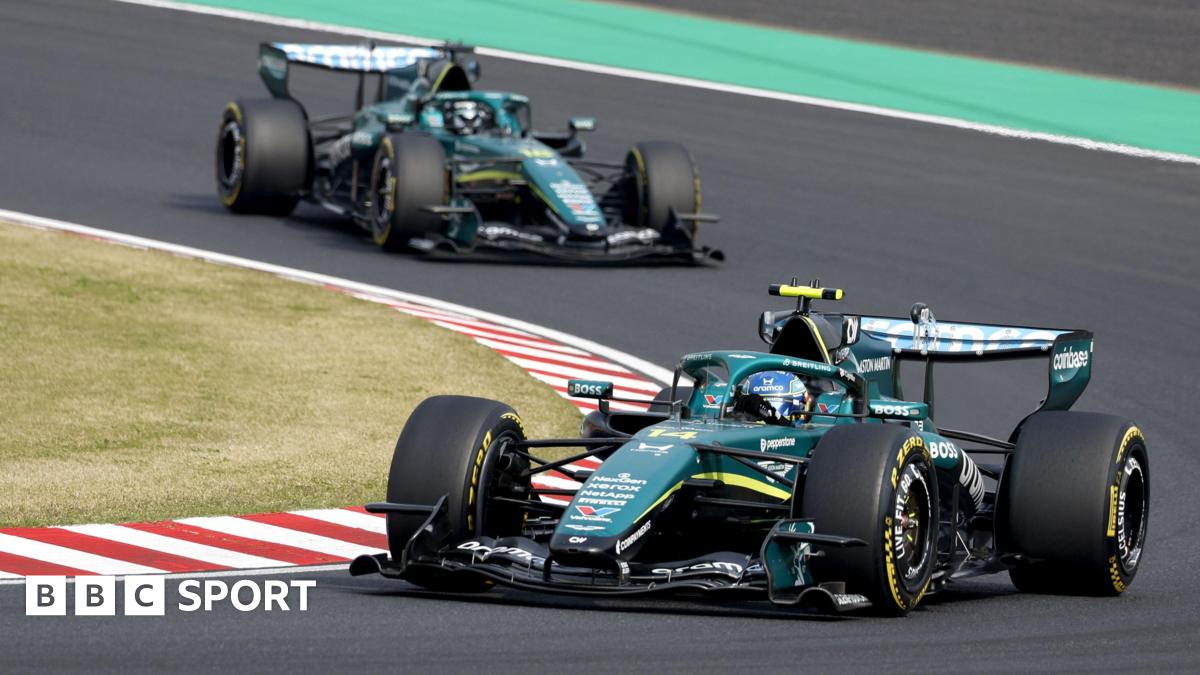
Honda’s 1.6-liter V6 hybrid unit produces approximately 1000 horsepower and deploys 350kJ of electrical energy per lap with 95% efficiency. None of which matters when your chassis handles like a shopping trolley with three working wheels.
The BBC’s Andrew Benson hit the nail squarely on the head this week, pointing out that Aston Martin’s woes extend far beyond whatever’s bolted to the back of their AMR26. While everyone’s been fixated on Honda’s return to F1 and whether their power unit can compete with Mercedes’ dominant engine, the real story is unfolding in the wind tunnel data and suspension telemetry.
Honda’s engine isn’t the problem here — it’s actually performing admirably. The MGU-H recovery rates are competitive, the internal combustion efficiency matches Ferrari’s numbers, and the deployment strategy through Silverstone’s technical sectors shows they’ve learned from their McLaren days. But you can’t engineer your way out of fundamental aerodynamic incompetence.
'The car feels like it's fighting itself through every corner'
— Fernando Alonso, post-qualifying Australia
Translated from Italian hand gestures.
The 2026 regulations have exposed Aston Martin’s aerodynamic philosophy like a thermal imaging camera on a leaky roof. While Mercedes found 15% more downforce efficiency and Ferrari’s ground effect package generates consistent load through speed ranges, Aston’s car produces drag coefficients that would make a brick jealous. Their floor design creates turbulence patterns that actively fight the rear wing’s pressure differential.
Fernando Alonso, bless his two-time championship soul, could probably extract pace from a motorized wheelbarrow, but even he can’t overcome physics. When your car loses 0.3 seconds per lap just in aerodynamic inefficiency, Honda’s perfectly calibrated energy deployment becomes academic. It’s like having a Formula 1 engine in a Formula Ford chassis — technically impressive, fundamentally pointless.
The real kicker? Aston Martin’s suspension geometry hasn’t adapted properly to the new tire compounds. While other teams adjusted their kinematics to optimize contact patches and thermal management, Aston’s setup creates inconsistent loading that overheats the fronts and underworks the rears. Honda’s engine mapping can compensate for some thermal issues, but it can’t fix mechanical grip problems that start at the suspension pickup points.
'We have good power, but the car won't let us use it'
— Lance Stroll, team debrief China
Reconstructed from memory. And by memory, we mean imagination.
Honda deserves credit for delivering a competitive power unit that’s actually more fuel-efficient than their 2021 spec. Their combustion chamber design and turbocharger integration show genuine engineering progress. But they’re essentially providing a precision instrument to a team that’s still figuring out which end of the screwdriver to hold.
The brutal truth is that switching engine suppliers won’t fix Aston Martin’s fundamental design philosophy. You can bolt Mercedes’ championship-winning engine to their chassis, but you’ll still have the same aerodynamic disasters, the same suspension geometry issues, and the same inability to generate consistent downforce.
Honda’s doing their job. The 120kW MGU-K deployment is smooth, the fuel flow optimization hits regulatory limits perfectly, and the reliability looks solid. Everything else? That’s on Aston Martin to figure out, preferably before Honda decides this partnership isn’t worth the engineering headache.
At least the engine sounds good while they’re struggling.