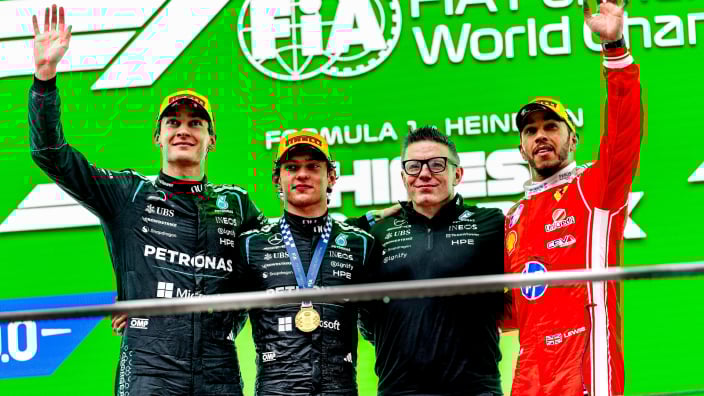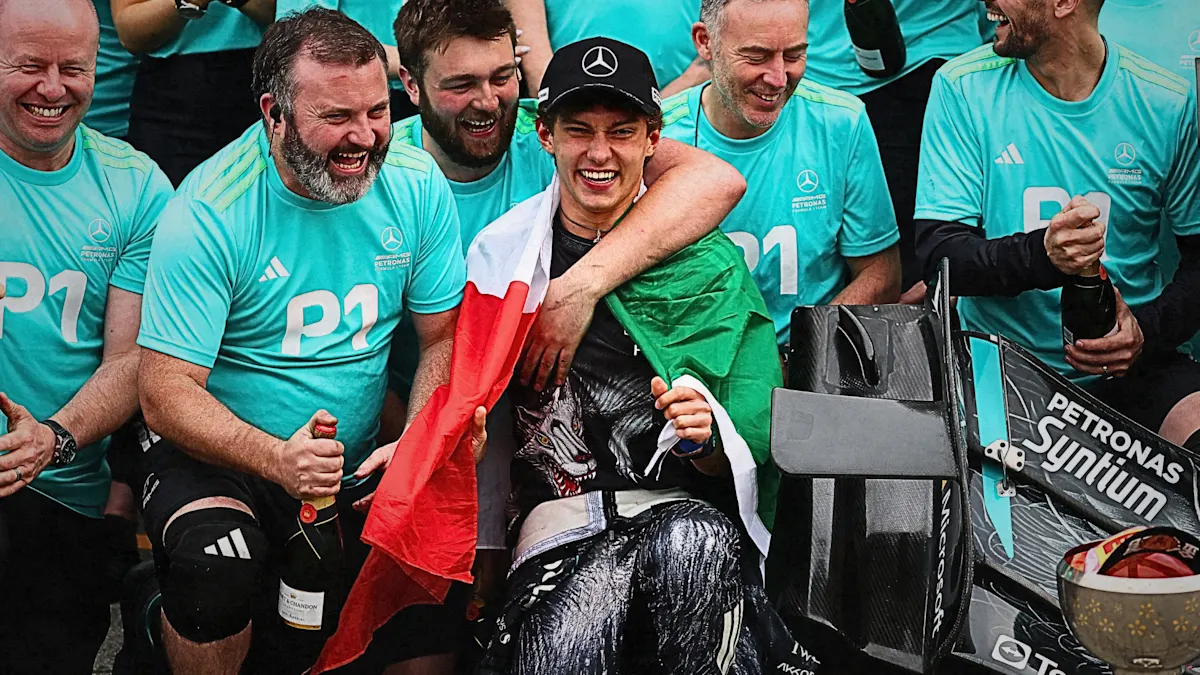
Seventy-two points. That’s what happens when you win two races in a row and your teammate wins the other one. Kimi Antonelli, all of 19 years old, sits atop the 2026 Drivers’ Championship after his second consecutive victory at Suzuka, and Mercedes have managed something they haven’t done since 2016: win the first three races of a season.
The plan was supposed to be gradual development. Give the kid some experience, let him learn from Russell, maybe grab a podium or two by mid-season. Instead, Antonelli has turned Mercedes’ patient rebuilding project into a championship assault, and the rest of the grid are left wondering how a teenager figured out the 2026 regulations faster than drivers with decades of combined experience.
When the Safety Car becomes your strategist
Lap 22 at Suzuka changed everything. Oliver Bearman’s heavy crash at Turn 13 — a reported 50G impact that thankfully left him conscious but retired — brought out the Safety Car at exactly the moment Antonelli needed it most. The Mercedes rookie had extended his first stint on medium tyres while Russell pitted early, gambling on track position over tyre advantage.
'George, the Safety Car timing is unfortunate for your strategy but optimal for Kimi's. Please maintain position.'
— Bono, trying to manage Russell's obvious frustration
This may or may not have happened between lap 3 and the chequered flag.
Russell’s response on the radio was audibly tense, the kind of barely controlled frustration that suggests internal Mercedes dynamics aren’t quite as harmonious as the press releases suggest. When your teammate gets handed the perfect pit window by circumstance while you’re stuck managing degraded tyres, even the most professional driver notices the irony.
But here’s the thing about Antonelli’s performance: the Safety Car helped with timing, but it didn’t put him on pole position. It didn’t give him the pace to pull away from Piastri in the closing stages. The kid earned this one, Safety Car or not.
The rookie who isn’t acting like one
What’s remarkable about Antonelli’s start to 2026 isn’t just the results — it’s how natural he looks managing race situations that should terrify someone with less than 30 Grand Prix starts. His tyre management at Suzuka was textbook veteran stuff: extending the stint without destroying the rubber, maintaining enough pace to stay clear of the pack, then finding another gear when the Safety Car reset the field.
Piastri, himself only a few years older but infinitely more experienced, couldn’t match Antonelli’s pace in the final stint despite starting on fresher tyres after his earlier pit stop. The McLaren driver managed a solid P2 — McLaren’s first podium of the season after their early-season disasters — but he was never really threatening for the win once Antonelli got into his rhythm.
The championship standings tell the story: Antonelli 72 points, Russell 63, then a significant gap to Leclerc on 49. Mercedes have turned what should have been a development season into a title fight, and their youngest driver is leading it.
Ferrari’s quiet progress
Lost in the Antonelli headlines is Ferrari’s steady accumulation of points. Leclerc grabbed another podium despite complaining about balance issues, while Hamilton fought through to P6 after what he called “a pretty terrible weekend” on the radio. The seven-time champion looked more comfortable in the Ferrari than he did through most of 2025, but he’s still finding the limit of what this car can do.
The Hamilton-Norris battle in the closing laps provided some of the race’s best action, with positions changing hands three times in the final five laps. Hamilton’s racecraft remains as sharp as ever, but Norris ultimately had the pace advantage when it mattered. Still, Ferrari leave Japan with both cars in the points and Hamilton finally looking like he belongs in red rather than just wearing it.
Where this leaves everyone else
Red Bull’s struggles continue to define their 2026 campaign for all the wrong reasons. Verstappen qualified P11, spent most of the race stuck behind cars he should have been lapping, and finished P8 with a face that suggested he’d rather be anywhere else. The three-time champion’s radio messages were a masterclass in diplomatic frustration — never quite crossing the line into open criticism, but leaving no doubt about his feelings regarding the RB22’s performance.
Hadjar, meanwhile, finished outside the points again, which raises questions about whether Red Bull’s faith in their rookie is justified or just stubborn optimism. The gap between expectation and reality at Red Bull has become the season’s most uncomfortable subplot.
McLaren finally showed signs of life with Piastri’s podium, but Norris could only manage P5 despite starting P3. The defending champion remains 47 points behind Antonelli after three races, which isn’t insurmountable but isn’t ideal either when Mercedes look this strong.
The next test comes at Miami in two weeks, another Sprint weekend that will test Mercedes’ newfound dominance. But for now, Formula 1 has a new championship leader, and he’s younger than some of the cars he’s racing against.