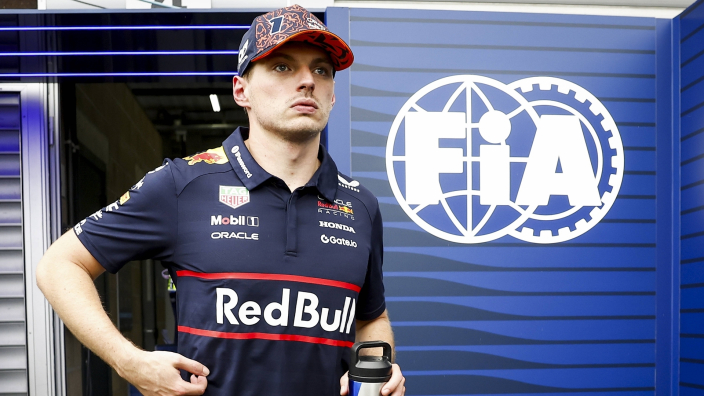
Eight points. That’s what three-time world champion Max Verstappen has managed from the first two rounds of 2026. For context, Oliver Bearman has 17 points. In a Haas.
Speaking ahead of this weekend’s Japanese Grand Prix, Verstappen delivered his most candid assessment yet of the new regulations: “These cars suit my driving style zero percent. Everything I’ve learned about finding speed, about pushing the limits — it’s like starting over.”
The admission comes as Red Bull continue to wrestle with the most radical regulation changes in F1 history. While Mercedes have mastered the active aerodynamics and energy management systems, Red Bull appear stuck in a development spiral that would make Alpine’s 2023 season look competent.
The active aero nightmare
Verstappen’s frustration centers on the new active aerodynamics package, which replaces the DRS system with movable front and rear wings that automatically adjust based on track position and speed.
“The car is making decisions for me,” Verstappen explained. “I’m used to controlling every aspect of the balance, but now the wings are opening and closing based on algorithms. Sometimes I need downforce where the system thinks I need efficiency.”
Red Bull’s struggles become apparent when comparing sector times. In China, Verstappen was consistently losing 0.3-0.4 seconds in the middle sector — precisely where the active aero transitions from high-downforce cornering mode to low-drag straight-line configuration.
The data reveals Red Bull’s calibration issues: their active aero is switching states too early in some corners, too late in others. Meanwhile, Mercedes have achieved seamless transitions that actually help their drivers find extra pace through complex sequences like Shanghai’s Turns 11-14.
'This car wants to do everything I don't want it to do. The wings are fighting me through every corner.'
— Max Verstappen, post-practice radio
We found this written on a napkin in the McLaren hospitality.
Energy anxiety
Beyond the aerodynamic chaos, Verstappen faces a steeper learning curve with the new electrical systems. The MGU-K now delivers 350kW — nearly three times more power than the previous generation — but requires constant energy management decisions that fundamentally change how drivers approach each lap.
“You’re always thinking about the battery,” Verstappen admitted. “Do I deploy now for the overtake? Save for the next DRS zone? The old system was simple — push button, get boost. Now every corner affects your energy for the next five laps.”
Red Bull’s energy management appears particularly crude compared to Mercedes’ sophisticated deployment strategies. In China, Russell and Antonelli could maintain consistent lap times while managing their electrical energy, whereas Verstappen showed dramatic pace fluctuations that suggested either poor energy planning or suboptimal battery calibration.
Suzuka’s unique challenge
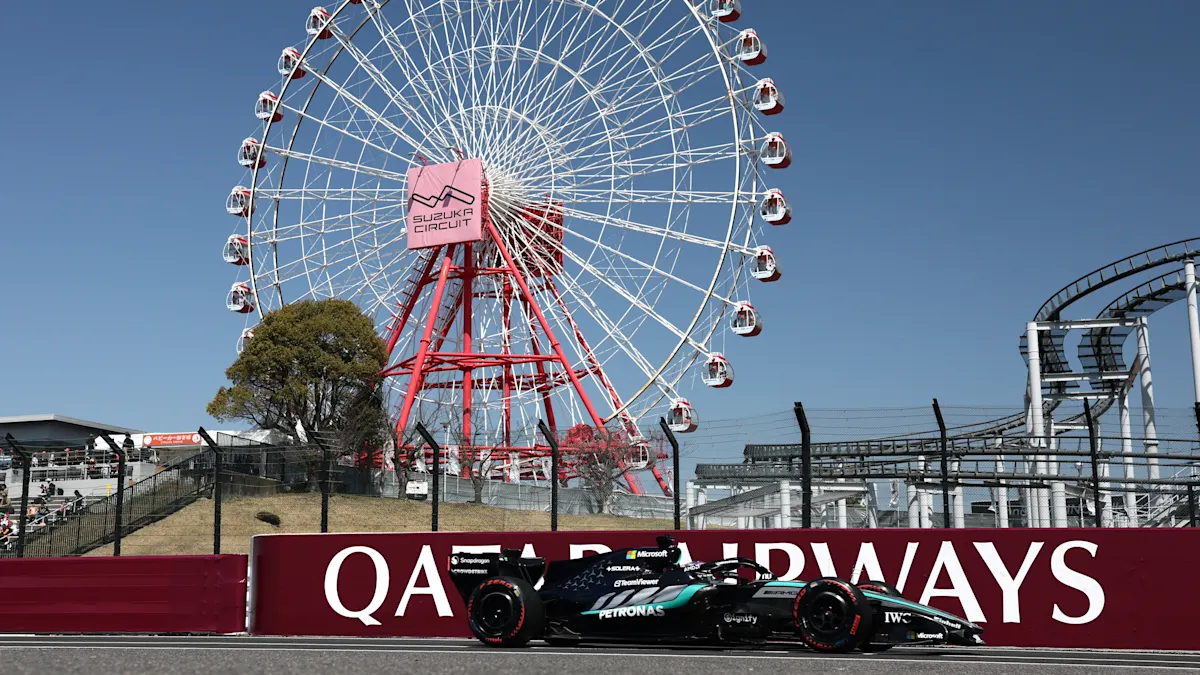
This weekend’s Japanese Grand Prix presents a specific test case for Red Bull’s struggles. Suzuka’s flowing layout — with its combination of high-speed corners and elevation changes — demands precise active aero calibration and intelligent energy deployment.
The track’s signature 130R corner, now taken at even higher speeds thanks to reduced drag, requires the active aero to maintain downforce longer than at most circuits. The subsequent chicane demands immediate reconfiguration for heavy braking and tight cornering.
For a driver who built his reputation on extracting maximum performance from stable, predictable machinery, Verstappen now faces the reality of cars that actively adapt around him. It’s a philosophical shift that challenges everything about his approach to speed.
What now?
Red Bull team principal Christian Horner remains optimistic about their development trajectory, but the mathematics are unforgiving. Mercedes hold a 86-point advantage in the constructors’ championship after just two races. At this rate, the title fight could be effectively over before the European season begins.
For Verstappen, the path forward requires something he’s rarely needed: patience. The regulations that once seemed designed to level the playing field have instead created a new hierarchy — one where the three-time champion finds himself learning to drive all over again.
The plan was simple: new regulations, closer racing, continued dominance. Reality, as always, had other ideas. Sometimes the sport’s greatest drivers discover that greatness isn’t just about speed — it’s about adapting when everything you know suddenly becomes obsolete.