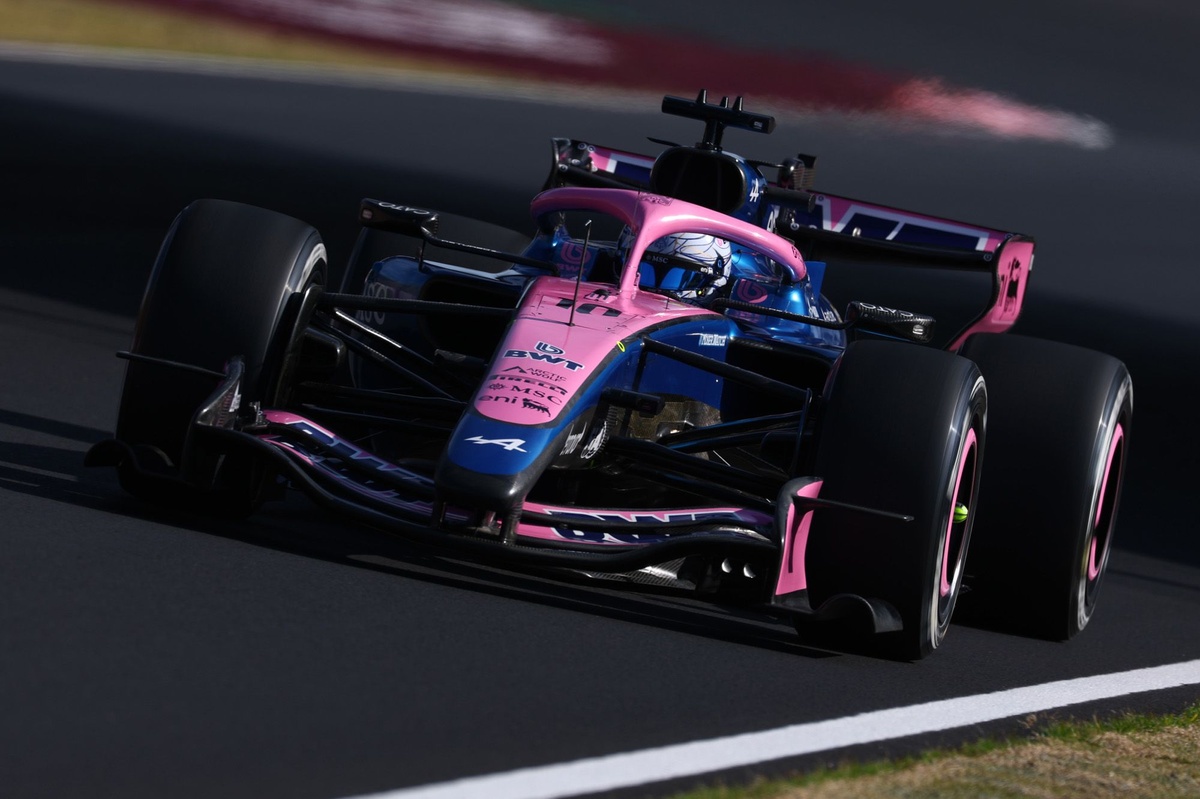
P7. Again. Pierre Gasly crossed the line at Suzuka this afternoon with the kind of mathematical precision that would make a Swiss watchmaker weep with envy. Three qualifying sessions, two different continents, one unwavering result: seventh place.
The lap time? 1:28.347. The gap to Russell’s pole? 1.243 seconds. The gap to P6? A heartbreaking 0.367 seconds. The pattern? Depressingly familiar.
'P7 again? At this point I should ask for a discount on the garage rental.'
— Pierre Gasly, post-qualifying
Probably. We weren't on that frequency.
The Science of Seventh
What makes Alpine’s consistency so remarkable isn’t just the result — it’s the method. Gasly isn’t stumbling into P7 through strategic blunders or lucky Safety Cars. He’s earning it, lap after lap, with surgical precision.
The data tells the story. In Shanghai, Alpine was 0.4 seconds behind the leading Mercedes. At Suzuka, with completely different corner characteristics and elevation changes, they’re 0.35 seconds off Russell’s pace. That’s not coincidence. That’s a car performing exactly to its aerodynamic potential.
Alpine’s A526 has found its sweet spot in the new regulations. The active aero system deploys cleanly, the Mercedes power unit delivers consistent energy deployment, and the chassis balance suits both Gasly’s aggressive style and Colapinto’s smoother approach. It’s a genuinely well-engineered machine that happens to be the fourth-fastest car on the grid.
The Numbers Game
Here’s where it gets mathematically beautiful and strategically heartbreaking. Gasly’s qualifying positions read like a metronome: P7, P7, P7. But look deeper at the sector splits, and you’ll see Alpine maximizing every tenth available.
At Suzuka, Gasly was typically Alpine in each sector — fourth or fifth fastest through the technical middle sector, consistently behind Mercedes, Ferrari, and one of the McLarens or Red Bulls depending on their respective dramas. Never quite fast enough to challenge the established order, never slow enough to fall behind the midfield scrap.
The gap analysis is even more telling. In Australia, P7 was 0.891 seconds off pole. In China, it was 1.156 seconds. Today at Suzuka, 1.243 seconds. As the field tightens up and teams optimize their packages, Alpine maintains its precise position in the pecking order.
What This Actually Means
Strip away the jokes about participation trophies, and you’re left with something genuinely impressive. Pierre Gasly is extracting maximum performance from a car that has clear limitations. No amount of driver heroics can overcome fundamental aerodynamic deficits, and Gasly isn’t trying to be a hero — he’s being a professional.
Alpine’s engineering team deserves recognition too. Building a car that performs this consistently across different circuit characteristics isn’t easy. The A526 works at Melbourne’s medium-speed corners, Shanghai’s long straights, and Suzuka’s flowing esses. That’s proper engineering, not luck.
The real question isn’t whether Alpine can break into the top six — the answer is probably not, at least not consistently. The question is whether they can maintain this level while teams like McLaren stumble through reliability issues and Red Bull wrestle with their new power unit philosophy.
Tomorrow’s Reality
Qualifying P7 means starting P7, and at Suzuka, that’s actually a decent place to be. The run to Turn 1 is long enough for slipstream games, and Alpine’s race pace has historically been stronger than their single-lap performance. Gasly knows how to manage tyres, when to attack, and when to consolidate.
More importantly, he knows exactly what his car can and cannot do. That’s the kind of understanding that turns P7 starts into P5 or P6 finishes when others make mistakes. It’s not glamorous, but it’s how you maximize points in a season where consistency might matter more than raw speed.
P7 might not win championships, but it wins respect. And sometimes, that’s exactly what you need while you’re building toward something better.