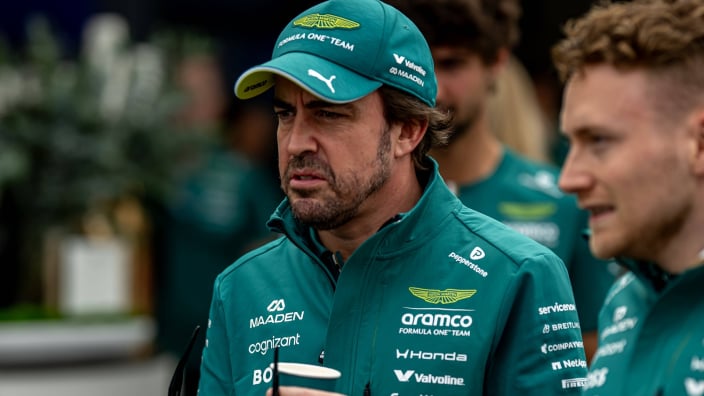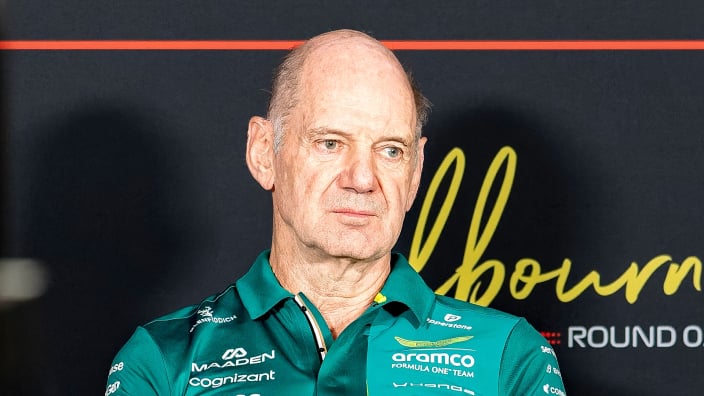
Zero points. That’s where Aston Martin sit after two races, and now their engine supplier has publicly admitted they’re not good enough to fix it.
Honda boss Koji Watanabe delivered the kind of corporate honesty that makes PR departments reach for their emergency whisky. Speaking to Japanese media ahead of this weekend’s Suzuka round, Watanabe acknowledged that Honda’s return to F1 as a power unit manufacturer is going about as well as their previous attempts. Which is to say, not well at all.
“We are struggling to provide Aston Martin with a competitive power unit,” Watanabe admitted. “Our absence from Formula 1 is hurting this project more than we anticipated.”
It’s the sort of statement that would normally be buried in corporate speak about “development phases” and “learning curves.” Instead, Honda have essentially held up a sign reading “We’re Not Ready” in the middle of the paddock.
The Numbers Don’t Lie
Two races. Two double-DNFs. Alonso and Stroll have yet to see a chequered flag in 2026, which is remarkable even by Aston Martin’s recent standards. In China, both cars stopped with what the team diplomatically called “power unit related issues” — the kind of phrase that covers everything from complete engine failure to the hybrid system deciding it preferred being a paperweight.
The new regulations have turned power unit development into something approaching rocket science. With the MGU-K now delivering 350kW instead of 120kW, and the target split being 50% electrical power versus 50% internal combustion, manufacturers needed to essentially rebuild everything. Mercedes appear to have cracked it. Ferrari are close. Honda, by their own admission, have not.
'Can we get more power? Any power? A bicycle dynamo would help at this point.'
— Fernando Alonso, lap 23
Reconstructed from memory. And by memory, we mean imagination.
What makes Honda’s admission particularly striking is the timing. They’ve had years to prepare for these regulations. The 2026 power unit specifications were finalised in 2023. Honda rejoined F1 specifically to supply Aston Martin with these new hybrid systems. This wasn’t a surprise exam — it was an open-book test with three years of study time.
History Repeats
Honda’s F1 power unit history reads like a manual on how not to return to motorsport. Their 2015-2017 McLaren partnership produced cars so slow that Alonso famously compared the engine to a “GP2 engine” over team radio. Their subsequent Red Bull partnership showed improvement, but Honda pulled out after 2021 just as their engines were becoming genuinely competitive.
Now they’re back, supplying Aston Martin with power units that can’t complete a race distance. The irony is thick enough to power a small city — which coincidentally might be more than their current F1 engines can manage.
Watanabe’s honesty is refreshing in a paddock where teams usually blame everything except the actual problem. But it also raises uncomfortable questions about Honda’s commitment to F1. If they knew their F1 absence would hurt the project, why didn’t they maintain a skeleton crew of engineers? Why not partner with another manufacturer during their hiatus? Why return if you’re not ready?
What Now for Aston Martin?
The immediate concern for Aston Martin is sporting. They’ve invested heavily in infrastructure, personnel, and development for 2026. Their Silverstone factory expansion continues. They’ve hired aggressively from other teams. Lawrence Stroll has written substantial cheques.
All of that investment becomes academic if your cars can’t finish races. Fernando Alonso, now 44, doesn’t have seasons to spare while Honda figures out how to build a reliable hybrid system. Lance Stroll, despite his father’s ownership, can’t hide behind mechanical failures forever.
The longer-term question is whether Honda will stick around if the problems persist. Their F1 commitment has historically been… flexible. If 2026 becomes a write-off and 2027 starts poorly, will Honda’s board patience extend to a third season of embarrassment?
Aston Martin signed with Honda partly to avoid being a customer team forever. The plan was to eventually transition to Honda’s full works status, with Aston Martin badging and Honda engineering creating a genuine manufacturer partnership. That vision looks increasingly distant when your current engines can’t complete 30 laps without failing.
Watanabe’s admission might be the beginning of Honda’s recovery — acknowledging the problem is the first step toward solving it. Or it might be the first public crack in a partnership that looked promising on paper but is crumbling under the weight of reality.
Either way, Suzuka will be fascinating. Honda’s home race, with both Aston Martins carrying power units that their own manufacturer admits aren’t good enough. The question isn’t whether they’ll be competitive — it’s whether they’ll finish.