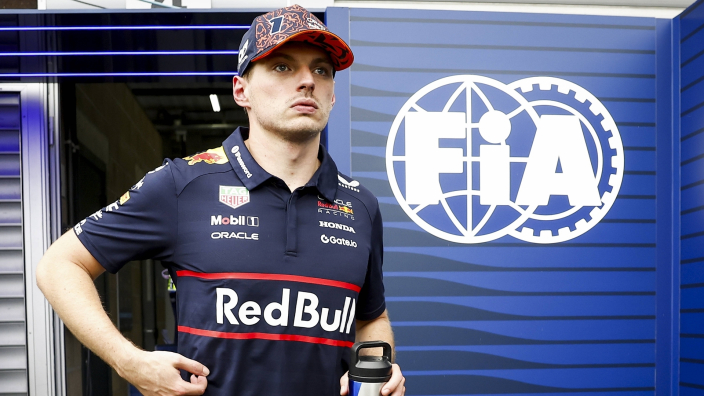
Eight championship points. That’s what Max Verstappen has managed after two rounds of defending his crown, and apparently those meager pickings have given him delusions of editorial control.
The three-time world champion turned media dictator this week, refusing to participate in a scheduled Red Bull press session until team personnel removed a specific British journalist from the room. The move has prompted whispers of a coordinated media walkout at this weekend’s Japanese Grand Prix, because nothing says “championship mentality” quite like picking and choosing which reporters get to ask about your P8 finish.
The Royal Treatment
Verstappen’s demand came during what should have been routine media availability at Red Bull’s Milton Keynes facility. Sources suggest the targeted journalist had previously asked pointed questions about Red Bull’s early-season struggles and the Dutchman’s visible frustration with the RB22’s handling characteristics.
The team complied with their driver’s request, creating the surreal spectacle of a three-time champion conducting interviews only for pre-approved media members. It’s the kind of selective access typically reserved for heads of state, not racing drivers who’ve managed fewer points than Oliver Bearman in a Haas.
'Can we just get the difficult journalists out? I have eight points to explain.'
— Max Verstappen, Red Bull media session
Probably. We weren't on that frequency.
The irony runs deeper than Verstappen’s championship deficit. Here’s a driver who built his reputation on fearless wheel-to-wheel combat, now apparently terrified of uncomfortable questions about his team’s Red Bull Powertrains reliability issues and his own adaptation struggles with the new active aerodynamics package.
Press Corps Rebellion
The media response has been swift and unified in a way that would make the drivers’ union jealous. Multiple outlets are reportedly coordinating a potential walkout from Verstappen’s official FIA press conference sessions at Suzuka, effectively giving him exactly what he asked for: no difficult questions.
The proposed action would leave Red Bull’s communications team scrambling to manage their star driver’s image without access to traditional media channels. It’s a high-stakes game of chicken between F1’s most successful recent driver and the press corps that helped build his global profile.
Some veteran paddock journalists have privately suggested this represents a dangerous precedent. If drivers can simply veto reporters they find inconvenient, the already carefully managed world of F1 media becomes even more sanitized. The sport’s governing body has remained conspicuously silent on whether such selective access violates media accreditation agreements.
Red Bull’s Dilemma
For Red Bull, caught between their temperamental star and a potential PR disaster, the timing couldn’t be worse. With Mercedes dominating the early season and their own reliability questions mounting, the last thing the team needs is a self-inflicted media crisis overshadowing their technical problems.
The situation puts team principal Christian Horner in an impossible position. Back his driver and risk alienating the media infrastructure that amplifies Red Bull’s global marketing reach, or side with press access principles and potentially upset the man who delivered three consecutive championships.
What makes this particularly fascinating is how it reflects Verstappen’s current competitive position. When he was winning everything in sight, difficult questions were just noise. Now, sitting eighth in the championship behind a teenager in a Haas, those same inquiries apparently sting enough to warrant editorial interference.
The Japanese Grand Prix will serve as the first test of whether this media standoff escalates or quietly resolves. Either way, Verstappen has managed to make himself the story for all the wrong reasons, which is quite an achievement when your car can’t stay ahead of a Haas on merit.