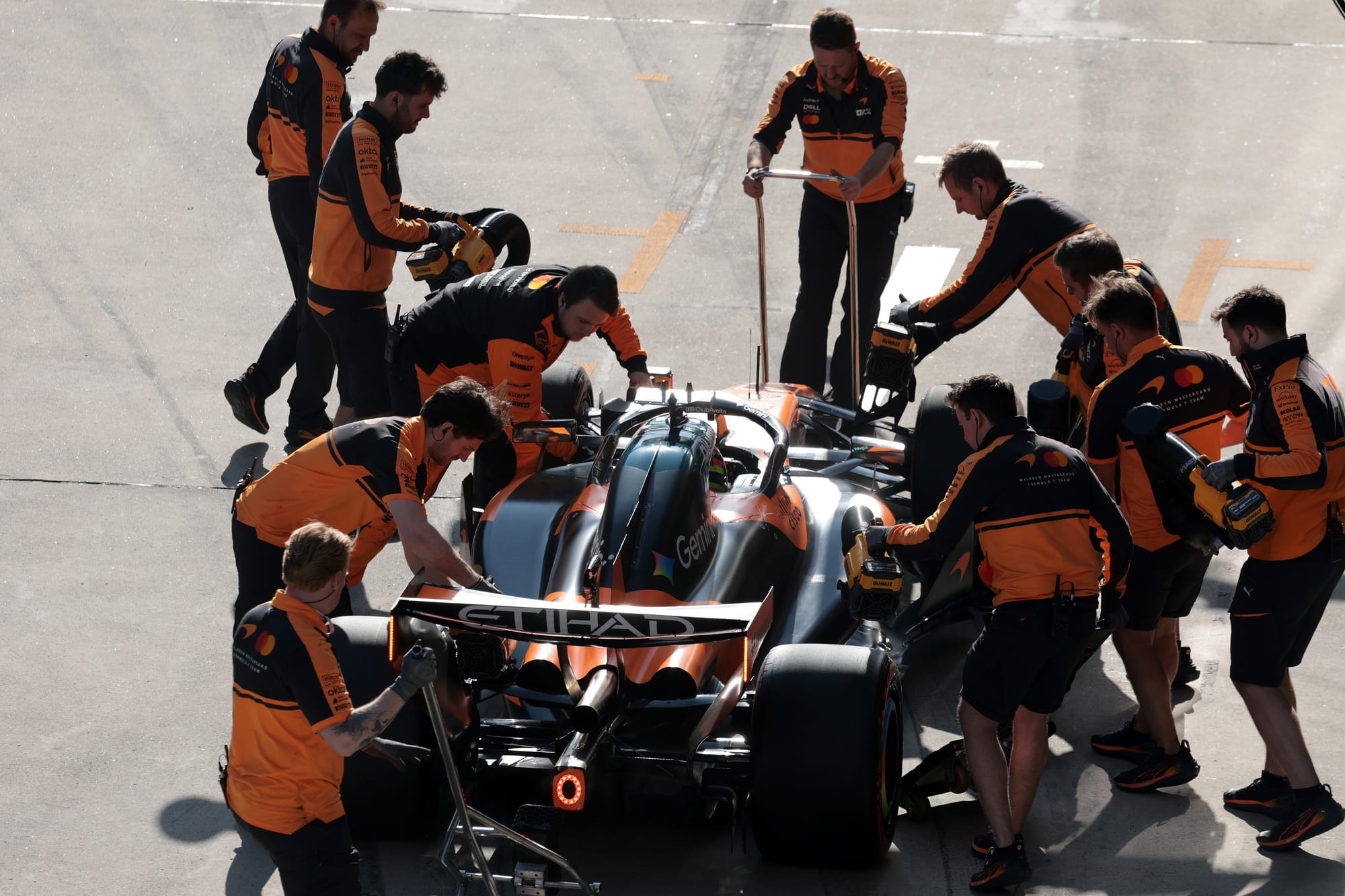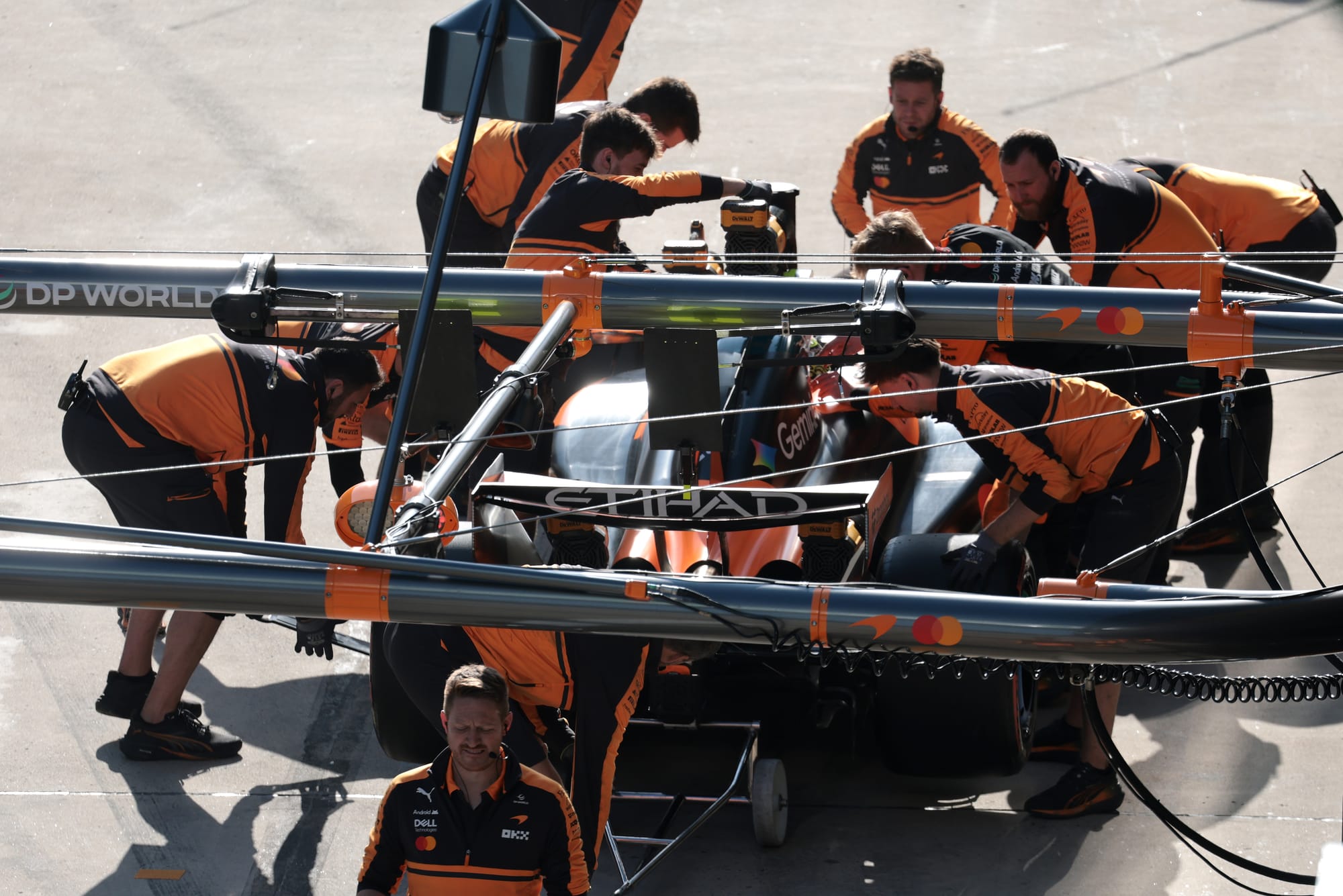
Three batteries per season. That’s the allocation under F1’s new energy management regulations, designed to push teams toward better reliability and strategic thinking. Lando Norris has already burned through 33% of his allowance, and we’re only two races into a 24-round championship.
The FIA investigation following McLaren’s double DNS in China has confirmed what the telemetry suggested: Norris’s battery unit suffered catastrophic failure during the reconnaissance lap, rendering it completely unusable. One down, two to go, and 22 races still on the calendar.
For context, that’s roughly one battery every 8 races if he maintains this rate. The mathematics are not encouraging.
The New Reality
The 2026 regulations introduced the three-battery limit alongside the massive power unit overhaul that deleted the MGU-H and tripled electrical output to 350kW. Teams can replace batteries for safety reasons without penalty, but any performance-related failure counts against the allocation. Exceed three units, and you’re looking at grid penalties that make the old engine penalty system look generous.
McLaren’s investigation revealed the battery experienced what engineers are calling “thermal runaway” — essentially, it overheated to the point where the safety systems triggered an emergency shutdown. The unit is now classified as “beyond economical repair,” which in F1 terms means “completely dead.”
'The battery is completely fried. Like, toast level fried.'
— McLaren engineer, post-China analysis
Reconstructed from memory. And by memory, we mean imagination.
The defending champion now faces a season-long tightrope walk. Every electrical system hiccup, every energy management miscalculation, every overly aggressive deployment strategy carries exponentially higher stakes. Two batteries to last 22 races means zero margin for error.
Historical Precedent
The closest comparison is the 2005-2008 engine regulations, when drivers were limited to one engine per weekend, then later one per two races. Back then, teams learned to manage power unit life through strategic detuning and careful deployment. The difference now is that battery failures are often instantaneous and catastrophic — there’s no nursing a dying battery to the chequered flag.
Mercedes faced similar allocation pressure in 2014 when the hybrid regulations first arrived, but they had the luxury of dominant pace to offset conservative energy management. McLaren in 2026 doesn’t have that buffer. They’re fighting for every tenth, every position, every point against a resurgent Mercedes and an increasingly confident Ferrari.
The irony is palpable. Norris won the 2025 championship partly through McLaren’s exceptional reliability — they finished 23 of 24 races that season. Now, eight months later, they’ve managed just one finish from four starts.
What Now?
McLaren’s battery supplier is working on analysis to prevent repeat failures, but the fundamental challenge remains: modern F1 batteries are pushed to their absolute limits every session. The 350kW output demands generate enormous heat and stress on every component. When they fail, they fail spectacularly.
The team has two options: run conservatively to preserve the remaining batteries, or maintain their aggressive energy deployment and hope the reliability issues were isolated to that first unit. Given that Norris sits sixth in the championship, 36 points behind Russell with 22 races remaining, conservative might not be an option.
There’s genuine respect for how McLaren handled the China situation — they could have attempted to start Norris with a compromised battery and risked a dangerous failure during the race. Instead, they made the difficult call to DNS and protect both driver safety and their remaining allocation.
That decision might prove crucial come November. But first, they need to make it to November with batteries intact. At this rate, that’s no guarantee.