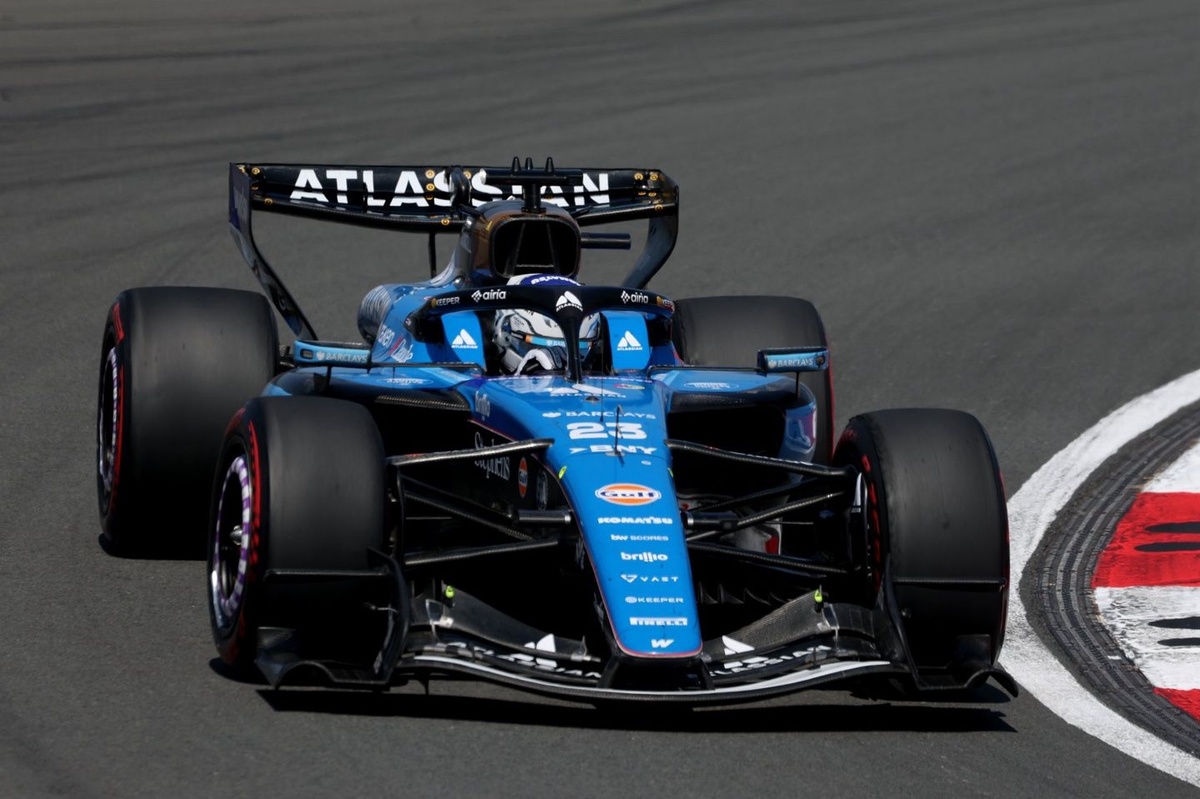
Two points. After finishing fifth in last year’s constructors championship, after James Vowles transformed the culture at Grove, after Carlos Sainz chose Williams over better-funded alternatives — two measly points.
The team that spent 2025 celebrating their return to relevance now finds itself in a position more familiar to longtime Williams watchers: dead last in the championship standings, watching everyone else disappear into the distance.
But this isn’t your typical Williams collapse. This time, there’s a twist that would make even the FIA’s technical department scratch their heads.
The Cooling Paradox
Williams have discovered something remarkable about the 2026 regulations: active aerodynamics and brake cooling apparently exist in completely separate universes. The movable wing elements that close for maximum downforce in corners also happen to block the precise airflow channels their brake ducts require.
Every time Alex Albon or Carlos Sainz push the car through a proper qualifying lap, the brake temperatures spike beyond sustainable levels. The active aero system — designed to make overtaking easier and cars more nimble — transforms the Williams into a mobile brake fire waiting to happen.
'The brakes are gone, Alex. We need to box this lap.'
— Williams engineer, Lap 34 China GP
The numbers tell the story. In China, Albon’s brake temperatures hit 1,100°C during his single points-scoring run to ninth place — well beyond the 950°C threshold where brake fade becomes catastrophic. Sainz managed just 27 laps before his front discs resembled molten cheese.
Engineering Impossible Choices
Most teams faced active aero integration challenges. Mercedes solved theirs with computational fluid dynamics that would make NASA jealous. Ferrari threw money at the problem until it disappeared. Red Bull… well, Red Bull have other issues entirely.
Williams chose a different approach: hope.
The technical directive from Grove reveals a team caught between two impossible solutions. Option A: redesign the entire brake cooling system, which would require homologating new bodywork parts and cost approximately £15 million they don’t have. Option B: run conservative brake settings that keep temperatures manageable but sacrifice 0.8 seconds per lap in qualifying trim.
James Vowles, to his credit, hasn’t sugarcoated the situation. “We built a car that’s fundamentally fast,” he admitted after China. “Unfortunately, we also built a car that’s fundamentally on fire.”
The Human Cost
Watching Sainz climb out of the cockpit in Shanghai, you could see the frustration etched across his face. This is a driver who left Ferrari — Ferrari — to join what he believed was F1’s most improved team. Instead, he’s managing brake temperatures like a Sunday driver in his grandmother’s Corolla.
Albon, meanwhile, has developed an almost supernatural ability to nurse overheating brakes through race distances. His China drive — managing thermal degradation while still extracting two championship points — represented the kind of racecraft that deserves better machinery.
The Grove team’s mechanics have started calling their pit stops “brake interventions” rather than strategic windows. They’re not optimizing lap times; they’re preventing mechanical failures.
What Happens Next
Williams face a decision that will define their entire 2026 campaign. Stick with the current package and accept a season of brake management races, or commit to a mid-season aerodynamic overhaul that might not pay dividends until 2027.
The clock is ticking. Japan’s Suzuka circuit — with its demanding 130R corner and heavy braking zones — will expose every weakness in the Williams cooling system. If they can’t solve this problem before the European season begins, their 2025 momentum becomes ancient history.
Sometimes the most innovative regulations create the most mundane problems. Williams discovered the hard way that you can engineer the perfect active aero system, but if your brakes melt before you reach the first corner, none of it matters.
Two points. For a team that dared to dream bigger, it’s a reminder that in Formula 1, even the fundamentals can betray you.