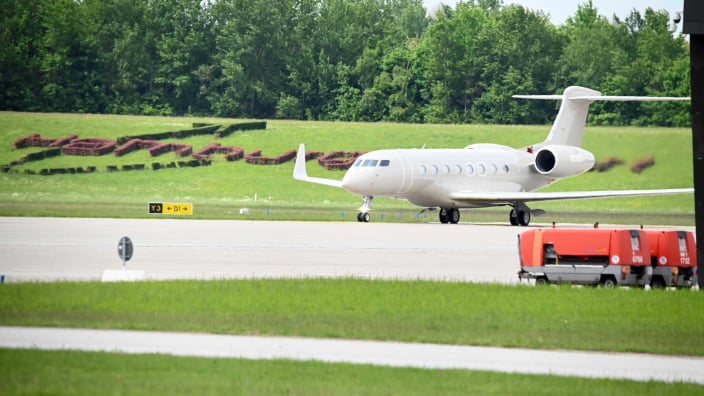
“Melbourne to Shanghai — who’s in?” The message pops up in a WhatsApp group called “Sky High” at 6:47 PM local time. Within minutes, three blue ticks appear. By morning, a Gulfstream G650 manifest shows four F1 drivers splitting a €180,000 charter flight.
Welcome to the reality of F1’s jet-set lifestyle: even when you’re earning eight figures, nobody wants to pay full freight for empty seats at 41,000 feet.
A former F1 driver, speaking on condition of anonymity because apparently talking about WhatsApp groups violates some unwritten paddock code, has lifted the curtain on how the grid’s elite coordinate their travel. Multiple driver WhatsApp groups exist purely for flight coordination, with names ranging from the functional (“Jets Available”) to the aspirational (“Mile High Club” — though that one’s apparently just Gasly being Gasly).
The Economics of Excess
The numbers explain everything. A private jet from Melbourne to Shanghai runs roughly €200,000. Split four ways, that’s €50,000 per driver — still eye-watering for normal humans, but pocket change for someone pulling down Hamilton or Verstappen money. More importantly, it’s the difference between a two-hour commercial connection nightmare and stepping off your private transport directly into the Shanghai paddock.
“The logistics are brutal,” explains our source. “You’ve got 22 drivers trying to get from one side of the world to the other, often with only 48 hours between races. Commercial flights mean connections, delays, customs queues. These guys would rather spend €50K to arrive fresh than save money and show up looking like they’ve been living in Terminal 3.”
The groups operate with surprising efficiency. Drivers post departure cities, arrival destinations, and preferred timing. Others respond with simple emoji reactions — thumbs up for yes, airplane for “I’m organizing this one,” money bag for “I’ll pay my share now.” No different from your mates organizing a night out, except the Uber costs more than most people’s houses.
'Lando's asking if anyone needs Monaco to Barcelona. Says he's got six seats and his trainer's already booked.'
— Source, reading group chat
Unexpected Alliances
The jet-sharing creates fascinating dynamics that wouldn’t exist otherwise. Drivers who barely speak during race weekends find themselves stuck together for eight-hour flights, leading to unlikely friendships and, occasionally, intelligence gathering that would make team principals nervous.
“You learn things,” our source admits. “Someone’s complaining about their car setup, another guy mentions contract negotiations, someone else is stressed about their teammate relationship. By the time you land, you know more about the grid than most journalists.”
The groups also reveal the grid’s social hierarchy in ways that championship standings don’t. Russell apparently organizes more flights than anyone else, earning him the unofficial title of “Flight Captain.” Alonso, predictably, has his own separate arrangements and rarely joins group chats. The younger drivers — Antonelli, Hadjar, Lindblad — get invited but often can’t match the financial commitment, leading to awkward “maybe next time” responses.
Most tellingly, the groups expose just how precarious some drivers’ financial situations really are. Not everyone on the F1 grid is swimming in Mercedes or Ferrari money. When a Racing Bulls driver hesitates to join a €40,000 split, it’s not because they’re being careful with money — it’s because that represents a significant chunk of their monthly budget.
The New Season Shuffle
The 2026 season has created fresh complications. With 22 drivers now instead of 20, the group dynamics have shifted. New faces like Bortoleto and the returning Perez need integration into established flight networks. Cadillac’s arrival means two more calendars to coordinate, two more sets of commercial obligations pulling drivers in different directions.
The regulation changes have made travel even more critical. With the new aero package and energy management systems requiring extensive simulator work between races, drivers are spending less time at home and more time shuttling between factories, training facilities, and race weekends. The WhatsApp groups have become essential infrastructure, not just convenient cost-sharing.
“It’s gotten more professional,” our source notes. “Used to be casual, now there are backup plans for backup plans. If the primary jet has mechanical issues, there’s already a secondary option booked. These guys can’t afford to miss practice sessions because of travel delays.”
The most successful drivers have learned to weaponize the system. Hamilton, for instance, rarely posts in the general groups but maintains smaller, more exclusive chats with select drivers. Russell coordinates flights that happen to include drivers he wants to build relationships with. Even something as mundane as shared transport becomes another tool in the championship battle.
Perhaps the most human detail: despite earning more money than small nations’ GDP, F1 drivers still get genuinely excited about splitting costs. The same competitive instinct that drives them to fight for tenth place carries over to finding the cheapest per-seat rate on a G550.
In a sport where every advantage matters, even the flight to the next race has become part of the game. The only difference is that this particular strategy session happens at 40,000 feet, with champagne service and WiFi that actually works.
The sky, it turns out, really is just another part of the paddock.