F1 spent forty years and approximately seventeen billion dollars trying to solve dirty air. The answer was deleting the MGU-H.
Not directly. But the 2026 regulation overhaul that killed the most complex piece of hybrid technology also accidentally created the cleanest racing F1 has seen since the 1990s. Two races into the new era, and drivers are following within half a second through technical sections that would have been impossible under the old aero philosophy.
The irony writes itself.
The Numbers Don’t Lie
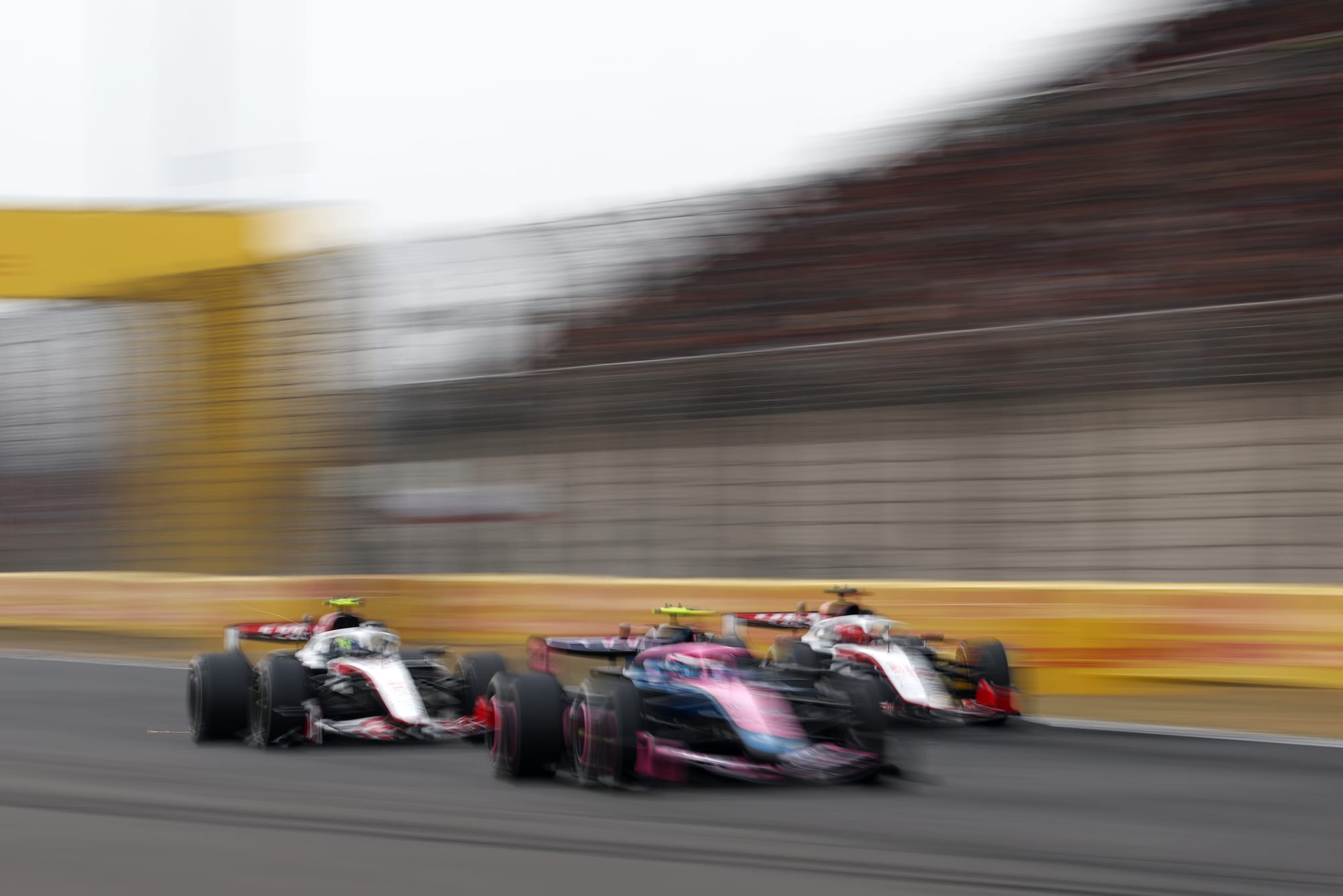
China proved the point. Lap 34: Hamilton follows Leclerc through the Shanghai Stadium section at 0.4 seconds. Both cars maintain grip. Neither driver lifts. In 2025, that same sequence would have ended with Hamilton sliding wide at Turn 13, losing a second and a half.
Russell and Antonelli ran nose-to-tail for twelve consecutive laps in Australia. Clean air, dirty air—made no difference. The Mercedes stayed planted regardless of track position.
Compare that to 2025 data: average following distance in technical sections was 1.8 seconds. Through fast corners, it jumped to 2.3 seconds. Drivers simply couldn’t get close enough to attempt overtakes until DRS zones.
2026 average following distance through the same corners: 0.7 seconds.
'The car feels normal behind Charles. Like, actually normal.'
— Hamilton, lap 28, China GP
How It Happened
Active aerodynamics killed dirty air by accident. When wings open on straights and close in corners, they create fundamentally different airflow patterns. The old problem—turbulent air destroying downforce for following cars—relied on static wing positions creating consistent vortices.
Now those vortices change every few seconds.
The flat floor helps too. Ground effect from 2022-2025 created massive low-pressure zones under cars. Disturb that airflow, lose half your downforce instantly. The return to conventional aerodynamics means following cars aren’t trying to suck air through a broken Venturi tunnel.
Narrower cars matter more than anyone expected. 100mm less width means cleaner air spilling off the sides. Less turbulence in the wake. The reduction sounds minimal until you realize how much cleaner the airflow becomes for cars running line astern.
But here’s the real kicker: energy management has replaced slipstream strategy. Drivers now focus on battery deployment zones rather than staying in dirty air for straight-line advantage. When you’re managing 350kW of electrical power, aerodynamic efficiency matters less than energy efficiency.
What This Actually Means
Racing has changed. Not just improved—fundamentally altered.
Watch the China footage again. Hamilton and Leclerc swap positions four times through the middle sector alone. Neither car struggles for grip when following. Neither driver has to wait for a DRS zone to make a move.
This is what F1 promised with every regulation change since 2009. Ground effect was supposed to fix it. DRS was supposed to fix it. Simplified front wings, wider cars, hybrid power—all marketed as solutions to the dirty air problem.
The actual solution was admitting defeat and building something entirely different.
F1 didn’t solve dirty air. It made dirty air irrelevant. The cars generate downforce differently, follow more closely, and prioritize energy management over aerodynamic positioning. The old problem still exists in theory—it just doesn’t matter anymore.
Where This Goes
Three weeks into the season, and we’re already seeing drivers attempt overtakes that would have been impossible twelve months ago. Turn 6 at Melbourne. The hairpin at Shanghai. Corners where you simply didn’t follow closely in 2025.
The championship fight reflects it too. Russell and Antonelli running 1-2 isn’t just Mercedes superiority—it’s proof that two cars can race wheel-to-wheel without the trailing driver losing performance.
If this continues through Suzuka, through the European leg, through tracks that historically punished following cars, then F1 has accidentally achieved something it spent decades trying to engineer: proper racing.
Took them long enough.