Two races. Zero points. One teammate collision.
Cadillac’s entry into Formula 1 was hailed as a triumph for American motorsport, a victory for grid expansion, and proof that Liberty Media’s vision could work. The reality check has arrived with the subtlety of a Safety Car at Monaco.
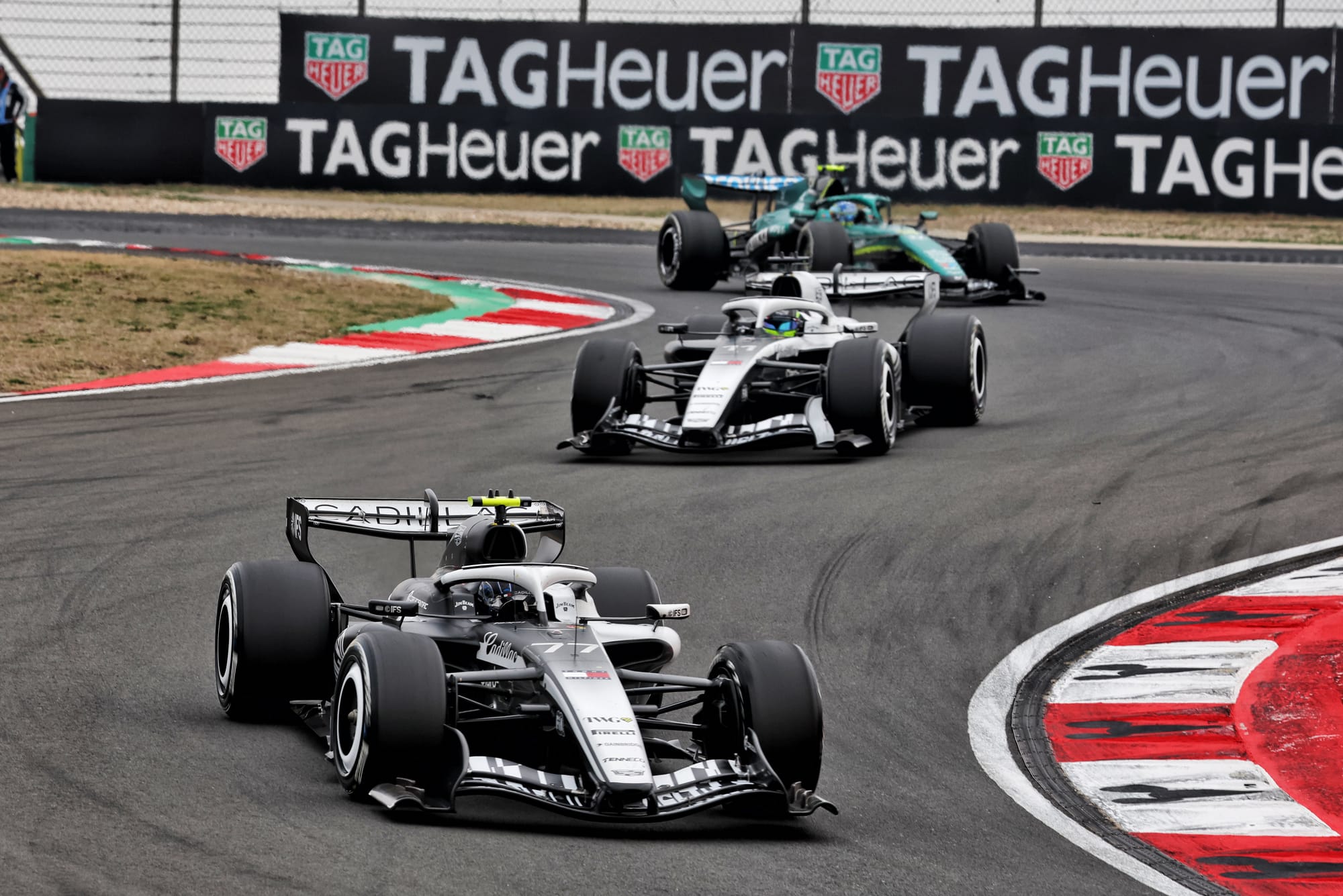
After China, Cadillac occupy the cellar of the constructors’ championship alongside Aston Martin, but at least Fernando Alonso and Lance Stroll have the excuse of mechanical failures. Sergio Perez and Valtteri Bottas managed to collide with each other on lap 1, which takes a special kind of coordination failure.
'We need to understand what happened there'
— Perez, after colliding with his own teammate on lap 1
The Numbers Don’t Lie
Eleventh out of eleven teams. That’s where Cadillac find themselves in the constructors’ standings, and the gap to tenth place Williams is only two points. Which sounds manageable until you consider that Williams achieved those two points with Carlos Sainz finishing ninth in China while Cadillac’s best result remains Bottas’s thirteenth in Melbourne.
The Ferrari power unit works fine — ask Charles Leclerc, who’s sitting third in the championship, or Oliver Bearman, who somehow dragged his Haas to fifth in China. The chassis isn’t fundamentally broken either. The problem appears to be the thousand small things that separate having an F1 car from having a competitive F1 operation.
Take the pit stops. In Melbourne, Bottas lost twelve seconds during his mandatory stop when the team couldn’t locate the correct wheel gun. In China, Perez’s crew managed a 4.8-second stop that would have been respectable in 2019 but felt glacial compared to the sub-three-second work happening in adjacent garages.
Growing Pains or Fundamental Issues?
Every new team faces an adjustment period. Haas took until their fourth race to score points in 2016, though they managed it with a double points finish that immediately announced them as legitimate midfield contenders. Cadillac’s trajectory feels different — less explosive development, more systematic confusion.
The driver pairing made sense on paper. Perez brings experience and setup knowledge, while Bottas provides the kind of steady professionalism that helped Mercedes win eight consecutive constructors’ titles. But experience doesn’t translate automatically to a new environment, and professionalism can’t compensate for fundamental operational gaps.
Their qualifying performances tell the story. P18 and P19 in Melbourne, P16 and P17 in China. Consistent mediocrity with a downward trend. Meanwhile, fellow Ferrari customer Haas qualified P11 and P12 in China, putting both cars within striking distance of Q3.
The Collision Course
The Shanghai incident crystallized Cadillac’s current predicament. Lap 1, Turn 6. Perez, running P15, attempted an optimistic move on the outside of Bottas, who was holding P16. Neither driver yielded sufficient space. Both spun. Both dropped to the back of the field.
It was the kind of incident that happens when drivers are frustrated with their machinery and desperate for track position. More concerning was the radio traffic afterward — two confused drivers asking their pit wall what the other was thinking, suggesting a communication breakdown that goes beyond simple racing incidents.
Teams spend months preparing their drivers for wheel-to-wheel scenarios with teammates. They establish protocols, discuss racing room, and create frameworks for internal competition. Cadillac’s preparation appears to have missed several chapters.
The genuine tragedy here is that both Perez and Bottas deserve better. These are drivers who have stood on podiums, who understand racecraft and tire management and the delicate art of extracting performance from difficult machinery. Watching them struggle with fundamental operational issues feels like watching virtuosos trying to perform on instruments that haven’t been properly tuned.
What Now?
Suzuka approaches, and with it another opportunity for Cadillac to demonstrate whether their early struggles represent growing pains or systemic issues. The Japanese Grand Prix rewards precision and consistency — qualities that new teams typically struggle to demonstrate.
The grid expansion experiment depends on Cadillac finding their footing quickly. F1’s stakeholders invested considerable political capital in adding an eleventh team, and the sport’s credibility suffers when that team appears fundamentally unprepared for the challenge.
Two more races without points, and the narrative shifts from “promising newcomers finding their feet” to “expensive mistake that proves the grid was fine at twenty cars.” Cadillac have the resources, the drivers, and the engine to avoid that fate.
Whether they have the operational competence remains an open question.