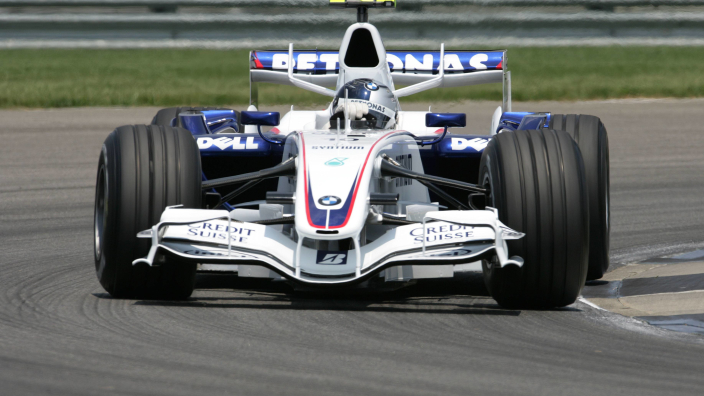
Five years, seventeen “we’re considering it” statements, and approximately 847 paddock rumours later, BMW has finally given Formula 1 a definitive answer: Nein.
The Bavarian manufacturer ended half a decade of will-they-won’t-they speculation at a Munich press conference today, officially ruling out any return to the F1 grid. This decision comes just as the sport transitions to its most radical power unit regulations since the hybrid era began — regulations that, ironically, might have suited BMW’s electrification expertise perfectly.
BMW last competed in F1 from 2006-2009 as the Sauber works team, scoring their sole victory at the 2008 Canadian Grand Prix with Robert Kubica. They’ve spent the years since making periodic noises about a potential return, particularly as F1’s profile exploded during the Netflix boom and budget caps made entry more feasible.
Perfect Timing to Walk Away
The timing is almost poetic. F1’s 2026 regulations mandate a 50-50 split between internal combustion and electrical power — exactly the kind of hybrid technology BMW has been developing for their road cars. With active aerodynamics replacing DRS and energy management becoming as crucial as tyre strategy, these new cars represent everything BMW claims to care about: efficiency, innovation, and electrical integration.
Yet here they are, choosing to sit this one out while Audi dives headfirst into the same regulatory framework. The contrast couldn’t be starker — one German premium manufacturer sees F1 as the perfect marketing laboratory for their electric future, while the other apparently sees it as an expensive distraction.
'We evaluated all options thoroughly and decided our resources are better invested elsewhere in motorsport and road car development.'
— BMW Board Member, Press Conference
BMW’s official reasoning centres on resource allocation and strategic priorities. Fair enough — developing a competitive F1 power unit would cost them roughly $130 million annually under the new cost cap, plus whatever they’d spend on a works team operation. That’s serious money, even for a company that sold 2.5 million cars last year.
The Audi Contrast
What makes this decision particularly interesting is watching Audi’s contrasting approach. While BMW talks about resource constraints, Audi is spending astronomical sums to transform the former Sauber operation into a full works team. They’ve hired Mattia Binotto as COO, poached Jonathan Wheatley from Red Bull as team principal, and committed to developing their own power unit for the regulation cycle that begins in 2026.
Audi’s first two races haven’t exactly been triumphant — Gabriel Bortoleto and Nico Hulkenberg have managed just two points combined — but they’re playing the long game. BMW, apparently, isn’t interested in playing at all.
The decision leaves the F1 power unit landscape unchanged: Mercedes, Ferrari, Red Bull Powertrains/Ford, Honda, and Audi will supply the grid, with no sixth manufacturer joining the party. Given the complexity and cost of F1 power unit development, BMW was realistically the last major manufacturer likely to enter in the near future.
Perhaps BMW looked at Red Bull’s current struggles with their first-year power unit and decided the risk wasn’t worth the reward. Verstappen’s DNF in China and his constant complaints about the car’s driveability hardly make for compelling marketing material. Sometimes the smartest move in F1 is not to play.
The five-year tease is over. BMW will continue their Formula E program, keep developing road car hybrids, and watch F1 from the sidelines. Meanwhile, Audi will discover whether German engineering can conquer the most complex technical challenge in motorsport. One chose certainty; the other chose chaos. Only time will tell which decision proves wiser.