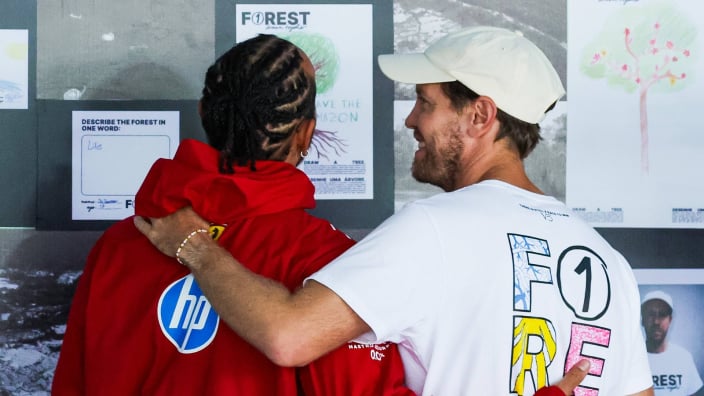
Sebastian Vettel has entered the London Marathon. The four-time world champion will attempt to complete 26.2 miles on foot, which represents a significant tactical shift from his previous approach of doing it at 200mph with a V6 turbo hybrid.
The German announced his participation through social media, posting what appeared to be a training photo alongside the caption “New challenge accepted.” No word yet on whether he’ll be bringing his own drinks bottle or relying on the marshals.
Different Kind of Endurance
Vettel retired from Formula 1 after the 2022 season, citing a desire to spend more time with his family and pursue environmental causes. Running 26.2 miles through London streets apparently falls under this remit, though the environmental benefits remain unclear given the number of plastic water cups he’ll likely require.
The marathon represents a departure from traditional post-F1 activities. Where other drivers might choose golf, commentary work, or the occasional celebrity race, Vettel has opted for something that involves significantly more suffering and no possibility of a Safety Car period.
Training for a marathon typically takes months of preparation. Vettel’s cardiovascular fitness from his racing days will help, but there’s a meaningful difference between the physical demands of controlling an F1 car and running for approximately four hours straight. One involves precise throttle control and split-second decision making. The other involves putting one foot in front of the other 50,000 times while questioning your life choices.
'Seb, you're looking good out there, maintain this pace'
— His running coach, presumably
No Pit Strategy Required
The London Marathon follows a point-to-point route from Greenwich to The Mall, covering 26 miles and 385 yards. Unlike F1, there are no opportunities for strategic pit stops, tire changes, or complaints about the car’s handling characteristics. Participants must complete the entire distance using the same pair of running shoes they started with.
Vettel’s racing experience may actually prove counterproductive in certain areas. F1 drivers are accustomed to immediate feedback through radio communications, detailed telemetry, and the ability to make mechanical adjustments between sessions. Marathon running offers none of these luxuries. When your legs start hurting at mile 15, there’s no engineer to suggest a different wing setting.
The mental challenge may prove more significant than the physical one. Vettel spent his career making hundreds of micro-decisions per lap, processing information at incredible speeds, and responding to changing conditions in real time. Marathon running requires a different kind of mental fortitude: the ability to maintain focus and motivation when nothing interesting happens for hours at a time.
The Long Game
What makes this genuinely admirable is Vettel’s willingness to tackle something completely outside his expertise. He’s not leveraging his F1 fame for an easy publicity opportunity or choosing a challenge where his racing background provides obvious advantages. Running a marathon is hard for everyone, regardless of how many championship trophies they have on their mantelpiece.
The London Marathon attracts around 50,000 participants annually, from elite athletes chasing personal records to charity fundraisers dressed as rhinoceroses. Vettel will likely fall somewhere in the middle of this spectrum, though his competitive instincts suggest he won’t be content with simply finishing.
His participation also highlights the strange reality of retirement for elite athletes. After spending two decades at the pinnacle of motorsport, where every aspect of performance is optimized and analyzed, Vettel is choosing to do something that will likely involve significant discomfort and no guarantee of success. There’s something refreshingly human about that decision.
The marathon is scheduled for later this year, giving Vettel several months to prepare. Unlike his F1 career, where car development and team dynamics played crucial roles in success, this challenge depends entirely on his individual preparation and mental resilience.
No pit crew, no radio communications, no opportunity to blame the car’s balance. Just 26.2 miles of London streets and whatever’s left in the tank after 16 years of Grand Prix racing.