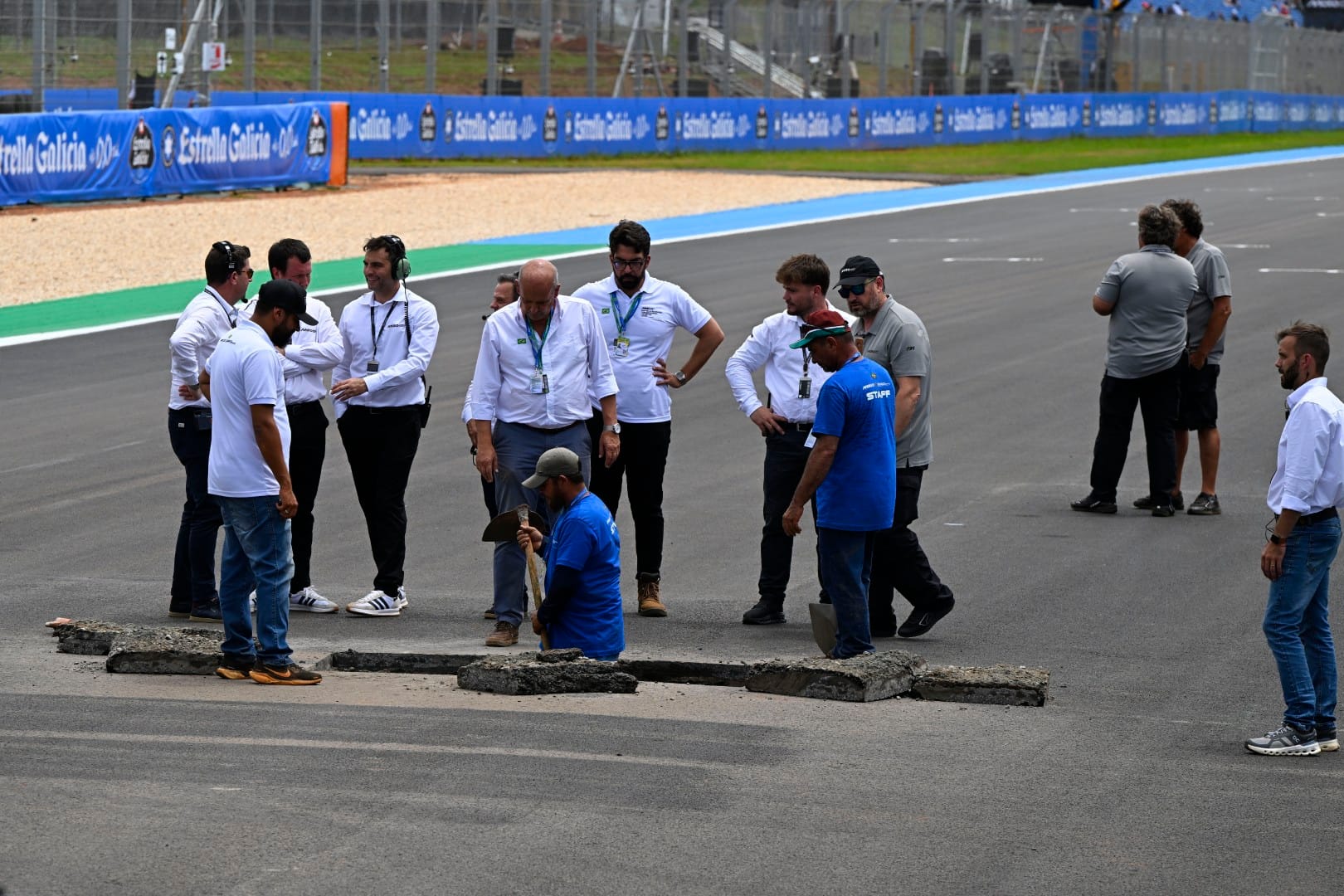
A sinkhole. At a MotoGP circuit. Three days before free practice.
The Goiania circuit in Brazil—chosen to host MotoGP’s triumphant return to South America—has developed what officials diplomatically call “significant track surface damage.” What they mean is a portion of the racing line has decided to relocate itself several meters underground, taking with it any pretense that someone, somewhere, properly inspected this facility before signing contracts.
MotoGP hasn’t raced in Brazil since 2004. After 22 years away, the series finally secured a deal to return, complete with government backing, tourism promotion, and all the fanfare you’d expect for a historic homecoming. The only thing missing, apparently, was someone checking whether the track could support motorcycles traveling at 320 km/h.
Damage Report
The sinkhole appeared overnight between Turns 7 and 8, creating what one paddock insider described as “a crater you could lose a Ducati in.” Track officials discovered the damage during routine morning inspections, finding a section of asphalt that had simply vanished, revealing the kind of foundation work that wouldn’t pass inspection for a shopping mall parking lot.
Emergency repairs began immediately, but the timing couldn’t be worse. Practice sessions are scheduled to begin Friday morning, with qualifying Saturday and the race Sunday. That’s 72 hours to fix infrastructure that should have been bulletproof months ago.
'The track is literally falling apart and we're supposed to race on this?'
— Anonymous MotoGP rider, Goiania paddock
The immediate concern isn’t just the repair timeline—it’s what this says about the overall circuit preparation. Sinkholes don’t appear overnight. They develop over months or years due to poor drainage, inadequate foundation work, or geological issues that proper surveys should have identified long before the first promotional poster was printed.
The Broader Picture
This incident raises uncomfortable questions about how motorsport venues are vetted and approved. MotoGP’s safety standards are exhaustive, covering everything from barrier placement to medical helicopter response times. Yet somehow, basic structural integrity of the racing surface wasn’t caught until riders were already in Brazil.
The Goiania circuit passed its initial FIM inspection in December 2025. Officials signed off on track layout, safety barriers, and run-off areas. But underground drainage and foundation stability—the unsexy infrastructure that keeps racing surfaces intact—clearly didn’t receive the same scrutiny.
For riders, this creates an impossible situation. They’ve traveled to Brazil, sponsors have activated campaigns, fans have bought tickets, and broadcasters have scheduled coverage. Canceling the event would be a financial and promotional disaster. But racing on a hastily patched surface carries risks no championship should accept.
What Now?
Track officials claim the repair work will be completed by Thursday night, allowing time for final inspections before Friday practice. They’re bringing in specialized concrete and asphalt teams, working around the clock to stabilize the affected section.
The real test comes when 20 MotoGP bikes hit the track at race pace. Will the repair hold? Will riders trust a patch job over what was supposed to be pristine racing surface? And what happens if more sections fail during the weekend?
MotoGP’s return to Brazil was meant to showcase the sport’s global reach and South America’s passion for motorcycle racing. Instead, it’s become a case study in what happens when promotional ambition outpaces proper preparation. The track surface tells the story: sometimes the foundation matters more than the fanfare.
The sinkhole will be fixed—probably. The questions about how this happened, and how to prevent it next time, will take longer to resolve.