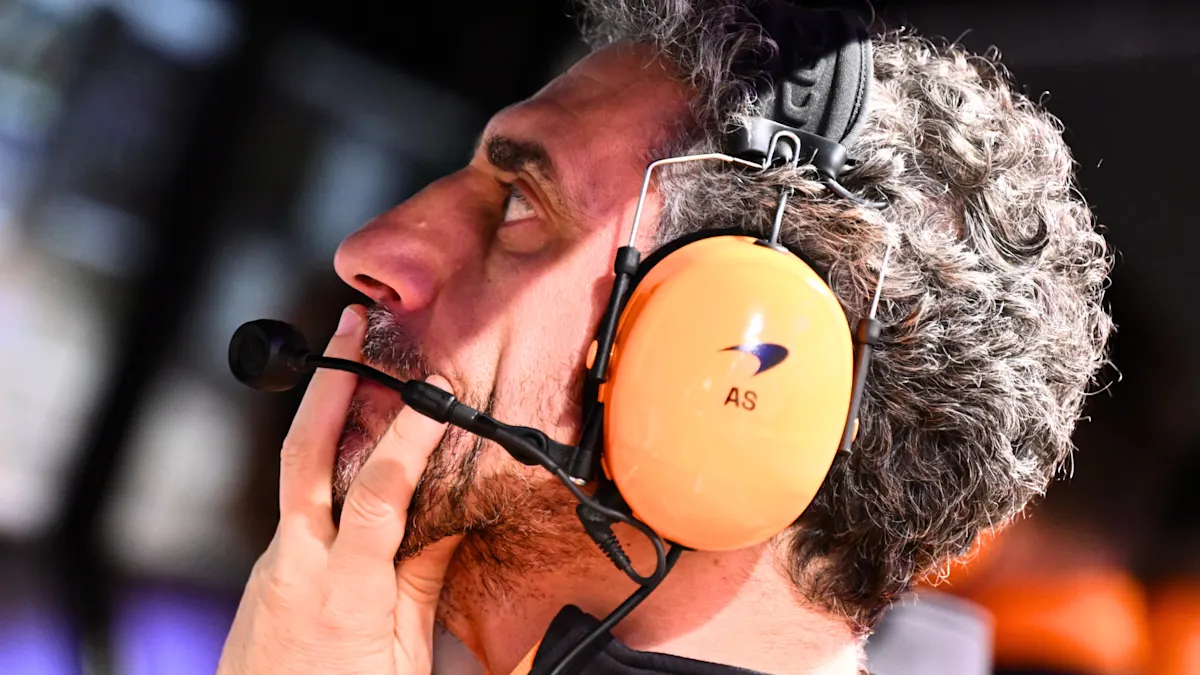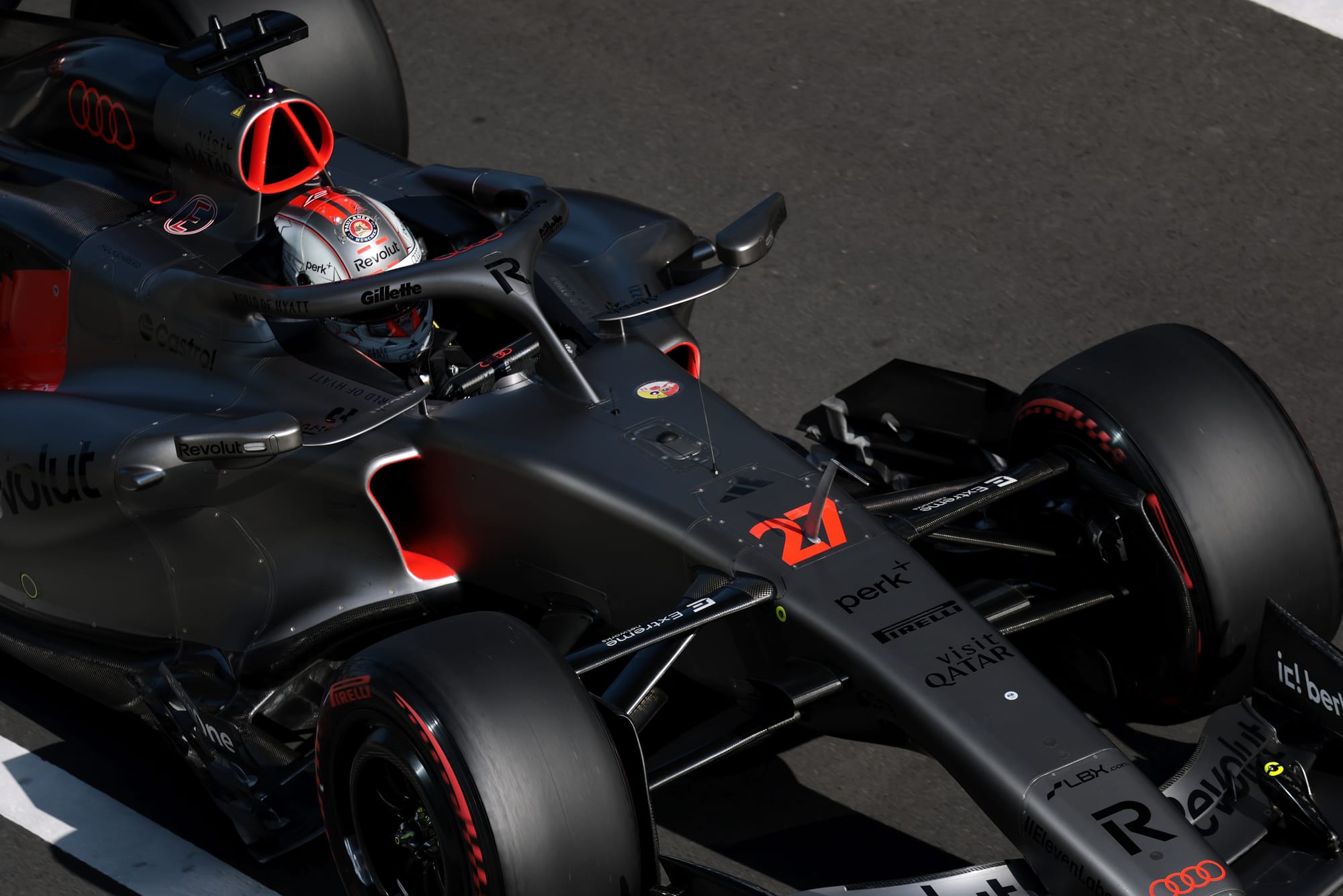
Jonathan Wheatley lasted 14 days as Audi’s team principal. Gabriel Bortoleto has scored more championship points than his former boss had races in charge.
The former Red Bull strategist, poached with much fanfare to lead Audi’s F1 works team project, departed the Ingolstadt outfit this morning following what sources describe as “fundamental disagreements over operational philosophy.” Translation: the Germans wanted German efficiency, Wheatley wanted actual results, and neither party got what they wanted.
Two races. That’s the entirety of Wheatley’s tenure atop what was supposed to be Formula 1’s most methodical manufacturer entry since Mercedes returned in 2010. Instead, Audi have managed to make their exit more dramatic than their entry, which is impressive considering they’ve spent three years telling everyone how seriously they take this sport.
The Numbers Don’t Lie
Bortoleto sits 14th in the championship with 2 points from his P10 finish in Australia. Hulkenberg has zero. The team is 8th in the constructors’ standings, ahead of Williams by virtue of one rookie’s single points finish. This is not the stuff of boardroom confidence.
The Brazilian rookie’s Melbourne points came courtesy of a chaotic race where half the grid encountered reliability issues. In China, both Audi drivers failed to start due to what the team diplomatically termed “electrical system complications.” When your debut as a works manufacturer involves watching the formation lap from the garage, explanations become necessary.
Wheatley, according to paddock sources, had pushed for immediate changes to the car’s fundamental setup philosophy. The 2026 regulation changes hit every team differently, but Audi’s interpretation appears to have missed the mark by several postcodes. Active aerodynamics require precise software calibration. Energy management demands sophisticated deployment strategies. Audi’s approach, one engineer suggested, resembled “bringing a calculator to a computer science exam.”
'The car feels like it wants to be somewhere else. Preferably a different series.'
— Nico Hulkenberg, Chinese GP Practice
What Went Wrong
Wheatley’s Red Bull background proved both asset and liability. His strategic acumen was never in question—the man orchestrated numerous Verstappen victories during Red Bull’s dominant years. But translating race-day tactics into long-term car development philosophy requires different skills entirely.
The conflict reportedly centered on resource allocation. Wheatley wanted immediate wind tunnel time redirected toward fixing the car’s fundamental balance issues. Audi’s technical leadership, led by COO Mattia Binotto, preferred a methodical approach focused on understanding why their simulation data diverged so dramatically from track reality.
Both approaches have merit. One might have produced faster results. The other might have prevented future embarrassments. Neither approach got the chance to prove its worth because corporate politics intervened faster than a Safety Car deployment.
Binotto now assumes interim team principal duties while Audi searches for Wheatley’s replacement. The Italian brings Ferrari pedigree and genuine technical expertise, but his own departure from Maranello wasn’t exactly triumphant. Still, he understands F1’s peculiar blend of engineering precision and organized chaos better than most.
The Bigger Question
Audi’s impatience reveals something troubling about modern F1 manufacturer programs. Mercedes took three years to win their first championship after returning. Red Bull needed four seasons to become genuine contenders. Even Ferrari, with their vast resources and institutional knowledge, required years to build championship-winning machinery.
Two races is barely enough time to understand your car’s fundamental characteristics, let alone fix them. The 2026 regulations created a clean slate for everyone. Mercedes nailed the brief immediately. Red Bull stumbled badly. McLaren’s double DNS in China suggests even experienced teams are struggling with the new technical demands.
Expecting immediate results from a rebranded Sauber team with an entirely new power unit was optimistic. Firing your team principal after two races suggests panic, not patience.
Wheatley deserved more time. Audi deserved better results. F1 got another reminder that manufacturer politics can be more complex than the aerodynamics they’re trying to master. The sport’s newest works team has learned that German efficiency and F1 reality operate on different timelines entirely.
Whether Binotto can bridge that gap remains to be seen. Two races in, Audi’s F1 journey already feels longer than anyone anticipated.