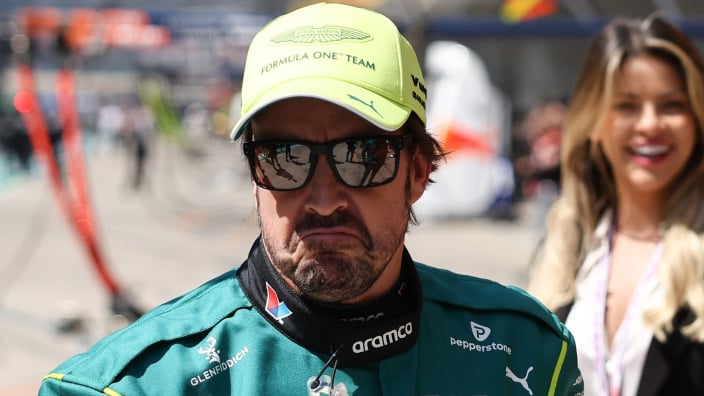
Fernando Alonso is 45 years old and officially the oldest F1 driver in over five decades. He has zero points after two races, both ending in retirement. Logic suggests this might be a good time to consider gardening or perhaps a nice consulting role with ESPN.
An unnamed F1 champion has other ideas, apparently.
Age Is Just A Number (When The Car Isn’t Awful)
The anonymous champion—and really, anonymity is doing some heavy lifting here when there are only about twelve people this could be—insists Alonso “has lost nothing” and remains capable of fighting at the front. This assessment comes despite Alonso managing exactly zero racing laps in China after his Aston Martin expired on lap 32, following teammate Lance Stroll’s even briefer appearance ending on lap 9.
The mathematics are straightforward enough. Alonso turned 45 in July 2026, making him older than any F1 driver since Luigi Fagioli in 1951. Fagioli, for context, shared a car with Juan Manuel Fangio that season and won the French Grand Prix at age 53. Different era, admittedly, when the primary safety equipment was a leather helmet and good intentions.
'The car is difficult, very difficult. We need to understand many things.'
— Fernando Alonso, post-China GP retirement
The Aston Martin Problem
Two DNFs in two races tells you everything about Aston Martin’s 2026 season that the standings cannot. While Oliver Bearman sits fifth in the championship for Haas and Kimi Antonelli has already won a race for Mercedes, Alonso’s primary achievement has been providing thoughtful post-retirement interviews about car balance.
The new regulations clearly caught Aston Martin off-guard. Active aerodynamics, the 50/50 power split between combustion and electrical systems, energy management zones—these are not areas where experience alone compensates for fundamental car deficiencies. When your Honda power unit shuts down on lap 32, driver age becomes irrelevant.
Yet the unnamed champion’s assessment carries weight precisely because it acknowledges what anyone watching practice sessions already knows. Alonso’s inputs remain precise, his racecraft unchanged, his ability to extract performance from difficult machinery undiminished. The issue is not the 45-year-old behind the wheel but the machinery beneath it.
The Uncomfortable Truth About Competition
Perhaps the more revealing aspect of this story is what it suggests about the current grid. If Alonso at 45 genuinely remains capable of fighting at the front—and the evidence from his final competitive seasons supports this—then what does that say about the generation meant to replace him?
Isack Hadjar, promoted from Racing Bulls at age 21, managed eighth place in China. Arvid Lindblad, the grid’s only rookie at 18, scored four points in Australia before failing to finish in China. Franco Colapinto, 21, has one point. These are not damning indictments of young talent, but they hardly suggest a wave of generational superiority washing Alonso aside.
The brutal reality is that F1 remains a sport where experience and racecraft matter as much as raw speed. Alonso demonstrated this repeatedly during his McLaren years, extracting podium finishes from cars that had no business running in the top ten. Age brings wisdom, spatial awareness, and an understanding of how to manage both machinery and race situations that younger drivers are still developing.
The Farewell Tour That Refuses To End
This may well be Alonso’s final season, though he has said that before. The Aston Martin seat represents his last realistic chance at competitive machinery, assuming the team can solve their current technical difficulties. If they cannot, 2026 becomes an extended farewell tour in uncompetitive cars—hardly the ending a driver of his caliber deserves.
The champion backing Alonso’s continued ability is almost certainly correct. At 45, Fernando Alonso remains Fernando Alonso: calculating, precise, capable of extraordinary drives when given adequate machinery. The problem is not his age but the unfortunate reality that being fast in a slow car still leaves you slow.
Whether Aston Martin can provide him with competitive machinery before his patience finally expires remains the more pressing question than whether he can still drive it properly.