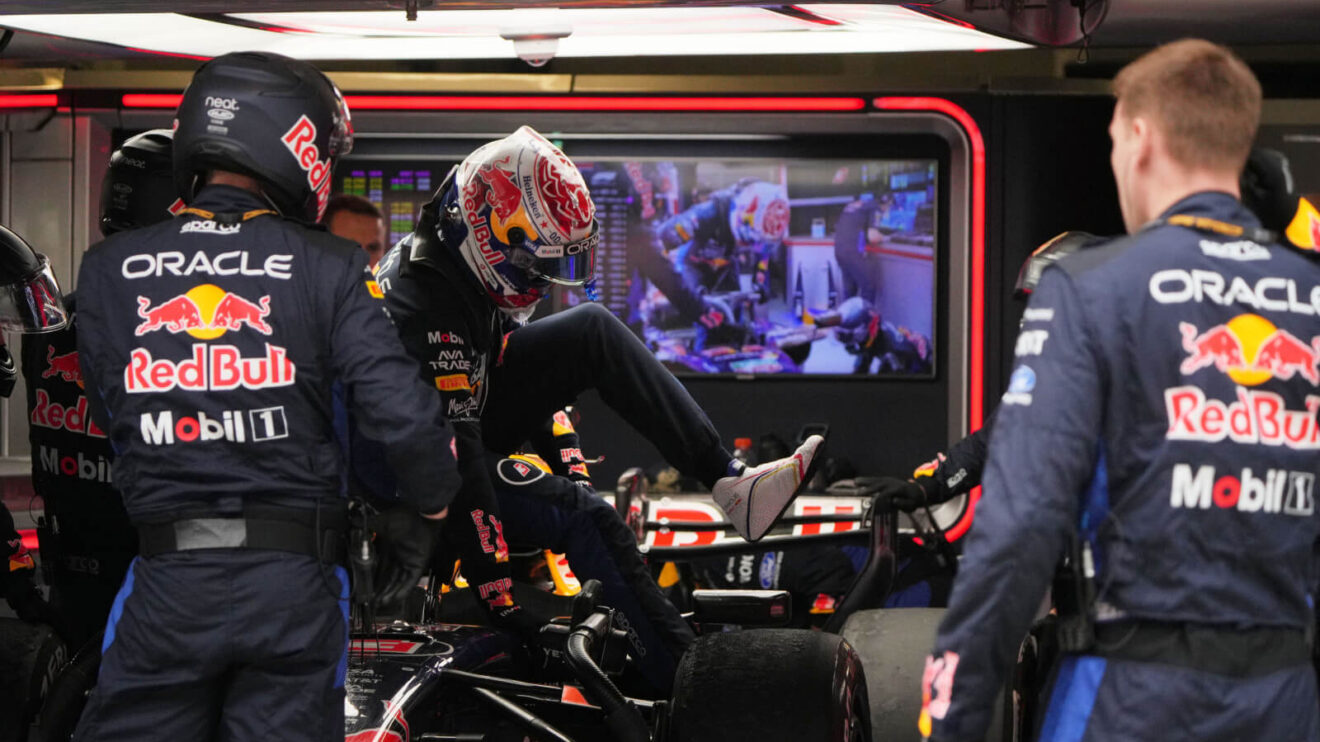
Lap 34 of Sunday’s Chinese Grand Prix. Max Verstappen’s Red Bull expires in a cloud of smoke and disappointment. The Dutchman climbs out, shakes his head, and trudges back to the pits where his RB26 sits on the scales for post-race scrutineering.
What happens next depends entirely on who you believe.
According to the FIA’s official post-race technical report, everything was perfectly normal. The Red Bull passed all mandatory checks. Weight, dimensions, fuel samples — all compliant with the 2026 regulations. Case closed, move along, nothing to see here.
According to one eagle-eyed fan with a smartphone and an apparent death wish for personal safety around F1 machinery, that official report might be worth about as much as Red Bull’s championship hopes this season.
The Photos That Broke the Internet
The images started circulating on social media Monday evening. Grainy, slightly out of focus, but clear enough to make out what appears to be a digital readout showing “798kg” on what looks suspiciously like the FIA’s official scrutineering scales. The problem? The minimum weight limit for 2026 is 768kg.
Thirty kilograms. In F1 terms, that’s not a rounding error — that’s a small passenger.
The fan, who goes by @PaddockSleuth on Twitter and has since made their account private, claims they were standing near the technical inspection area when Verstappen’s car was being weighed. Their caption was delightfully direct: “Either my eyes need checking or the FIA’s scales do. 798kg on a Red Bull. Minimum is 768kg. You do the math.”
The math, as it turns out, is causing quite a stir.
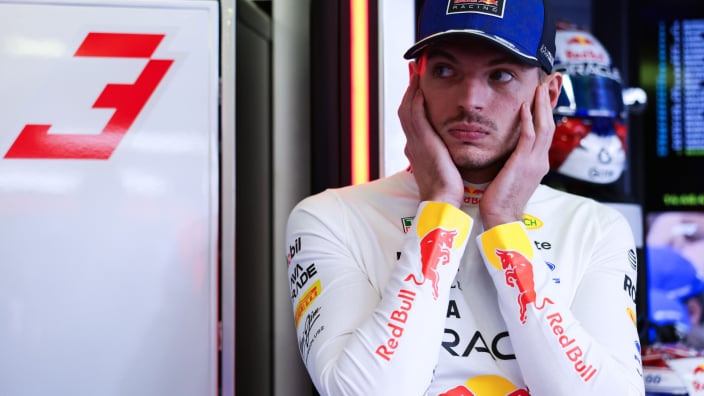
'The car feels heavy, like really heavy. Something is not right here.'
— Max Verstappen, post-practice radio (alleged)
When Fans Become Technical Delegates
Here’s where this story gets genuinely fascinating. While the FIA employs a small army of technical delegates, scrutineers, and officials whose entire job is to ensure cars comply with the regulations, it took one person with a phone camera to potentially expose what could be the biggest technical violation of the season.
The 2026 regulations are crystal clear on minimum weight: 768kg including the driver. No exceptions, no appeals, no “we’ll fix it next time.” Cars that fail to meet the minimum weight face immediate disqualification from the session in question.
Red Bull’s struggles this season suddenly make more sense if their car is carrying an extra 30kg everywhere it goes. That’s roughly four-tenths per lap at most circuits — exactly the kind of deficit that would explain Verstappen’s frustrated radio messages about the car feeling “wrong” and “undriveable.”
The silence from both Red Bull and the FIA has been deafening. No denials, no clarifications, no angry statements about misinformation. Just the sound of lawyers presumably working overtime and PR departments frantically refreshing social media feeds.
The Scrutineering System on Trial
This isn’t just about one potentially overweight car. It’s about the entire technical inspection process that forms the backbone of F1’s regulatory framework. If a fan with a smartphone can capture evidence that appears to contradict official scrutineering results, what does that say about the system?
The FIA’s technical delegates are supposed to be the sport’s ultimate arbiters of regulatory compliance. These are the people who measure wings to the nearest millimeter, who analyze fuel samples with laboratory precision, who can disqualify a car for having brake discs 0.1mm too thin.
Yet somehow, if these photos are accurate, a 30kg weight violation — roughly equivalent to carrying an extra set of wheels — went unnoticed or unreported.
The timing couldn’t be worse for the governing body. Mohammed Ben Sulayem’s FIA is already facing criticism over inconsistent penalty decisions and the ongoing Vegas stewarding controversy from last season. Adding “can’t operate a scale properly” to the list of complaints isn’t exactly what the organization needs right now.
The fan community, meanwhile, has responded with typical internet efficiency. Within hours, #WeighGate was trending, amateur photo analysts were enhancing the images, and conspiracy theories were multiplying faster than Red Bull’s problems this season.
Some are calling for the fan to be given an official role as a technical delegate. Others are demanding the Chinese GP results be reviewed. A few are simply asking why it took someone standing in the paddock with a phone to potentially uncover what trained officials missed.
The truth is, we may never know exactly what happened in that scrutineering bay. The photos could be misleading, the angles deceiving, the readout showing something else entirely. But the fact that they’ve sparked this level of controversy says everything about the current state of trust between fans, teams, and officials.
What we do know is this: one person with a camera has just reminded everyone that in F1, the most effective oversight sometimes comes from the most unexpected places. While the FIA’s technical delegates were presumably following their established procedures, a fan was doing what fans do best — paying attention to the details that matter.
Whether Red Bull’s car is actually overweight remains to be seen. Whether the FIA’s credibility can handle another controversy is a different question entirely.
The Japanese Grand Prix is this weekend. Expect every camera in the paddock to be pointed at the scrutineering scales.