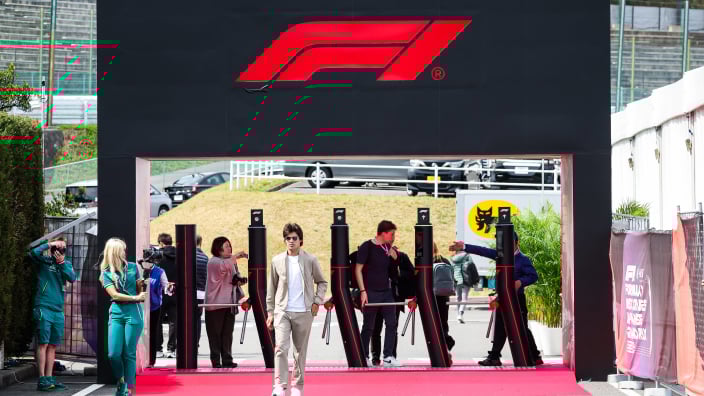
Formula 1 has announced a VIP season ticket priced at $3.75 million. This represents roughly 75 times the median UK household income, or alternatively, enough money to buy a decent house in most civilized countries.
The package promises “unprecedented access” to the F1 experience across all 22 races of the 2026 season. Given that we’ve already lost Bahrain and Saudi Arabia to geopolitical complications, buyers are essentially paying $170,000 per remaining race weekend. That’s more than most people spend on their entire motorsport fandom across a lifetime.
What Three Point Seven Five Million Actually Buys
The VIP experience includes private paddock access, exclusive hospitality suites, and guaranteed grid walks before each race. Ticket holders receive personal liaisons—essentially babysitters for the astronomically wealthy—who handle everything from restaurant reservations to explaining why Max Verstappen’s Red Bull decided to expire spectacularly at Shanghai.
There’s also promised access to driver briefings, garage tours during practice sessions, and what F1 describes as “intimate conversations with team principals.” Whether Christian Horner discussing energy deployment issues counts as intimate conversation remains unclear, though at this price point, perhaps it should.
'At this price point, we expect our guests to feel truly part of the F1 family. They'll experience every aspect of our sport in unprecedented luxury.'
— F1 Commercial Executive, presumably keeping a straight face
The package includes helicopter transfers between venues, private jet coordination for flyaway races, and accommodation in what F1 terms “partner luxury properties.” This presumably means five-star hotels rather than the Premier Inn, though at these prices, one might reasonably expect property ownership to be included.
The Democracy of Motorsport
F1 has spent considerable effort in recent years expanding its global reach and attracting new audiences. Drive to Survive brought millions of new fans to the sport. Social media engagement has exploded. Young drivers like Kimi Antonelli are capturing imaginations worldwide—his maiden victory at Shanghai proved that age nineteen and raw talent still matter more than corporate backing.
Then F1 announces season tickets that cost more than most people earn in several decades.
The disconnect is remarkable. The same sport celebrating Antonelli’s breakthrough drive, where a teenager from Italy beat seasoned professionals through pure pace and racecraft, simultaneously prices itself beyond the reach of virtually everyone who might be inspired by such moments. It’s difficult to reconcile grassroots inspiration with corporate hospitality packages that exceed the GDP of several small nations.
Market Reality Check
F1 argues this represents value for ultra-high-net-worth individuals seeking exclusive experiences. Fair enough. The paddock has always been exclusive territory, and premium pricing for premium access follows basic economic logic.
But there’s a difference between expensive and deliberately exclusionary. General admission tickets have risen steadily across most circuits. Standard hospitality packages now price out middle-class families who might attend one race per year as a special occasion. This $3.75 million offering feels less like premium service and more like a statement about F1’s target demographic.
The timing is particularly tone-deaf given current grid dynamics. We’re watching one of the most competitive seasons in recent memory, with new regulations creating genuine uncertainty. Cadillac’s arrival as an eleventh team has energized the sport. Young talents like Arvid Lindblad and established stars like Lewis Hamilton adapting to Ferrari create compelling narratives.
These stories deserve audiences who can afford to witness them firsthand. F1’s continued march toward ultra-luxury pricing risks creating a sport where the most passionate fans can only watch from home while corporate guests occupy the best seats without necessarily caring about lap time deltas or tire strategy nuances.
The $3.75 million season ticket exists because someone will buy it. That’s market economics. Whether it represents the direction F1 should be heading is an entirely different question.