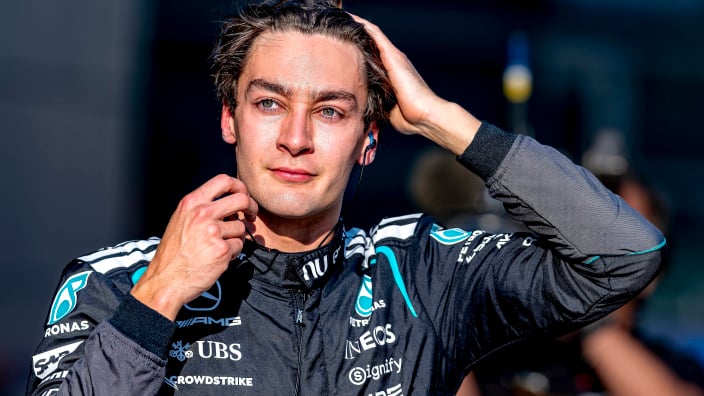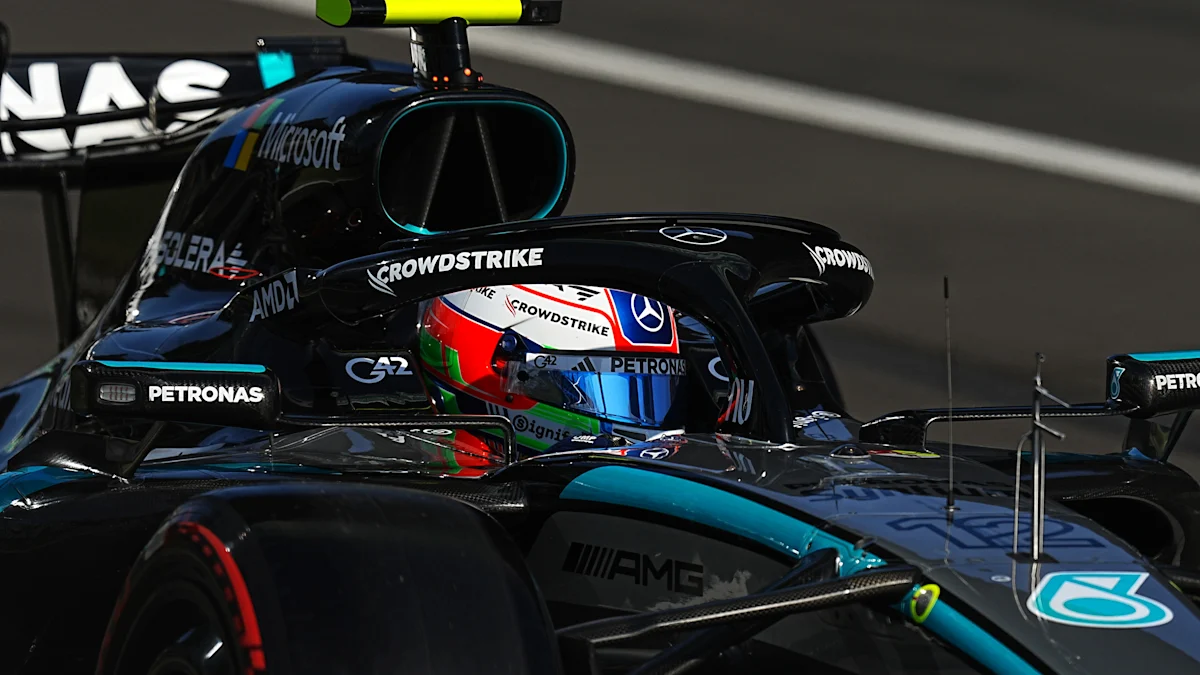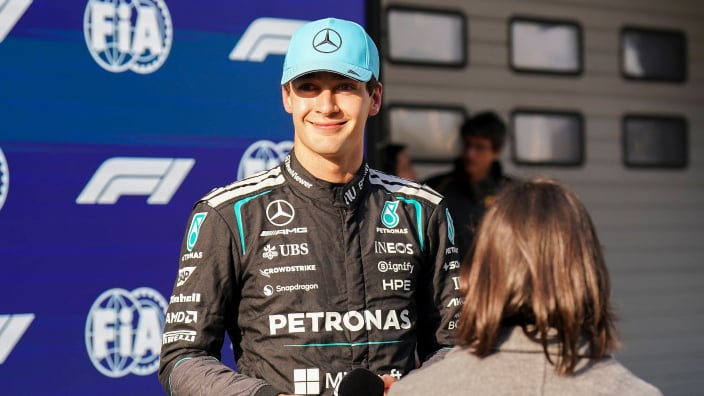
George Russell leads the 2026 World Championship after two rounds. Naturally, he wants to leave Mercedes.
Reports suggest the 28-year-old is exploring a $300 million exit clause that would allow him to depart Brackley for a rival outfit. The timing is impeccable. Russell sits atop the standings with 43 points, his teammate Kimi Antonelli claimed a maiden victory in China, and Mercedes appear to have found genuine pace under the new regulations. Obviously, this is the perfect moment to consider jumping ship.
Energy Crisis at the Silver Arrows
The logic becomes clearer when examining Mercedes’ underlying issues. Despite Russell’s P2 finish in China and Antonelli’s breakthrough win, both drivers have voiced frustration with the W17’s energy deployment characteristics. The new 2026 regulations demand precise management of electrical energy recovery and deployment, and Mercedes are struggling with consistency.
'The car has pace but these energy management issues are doing my head in. We're losing three-tenths on the straights when the system doesn't deploy properly.'
— Russell, Post-Chinese GP
Russell’s concerns extend beyond immediate performance. Sources suggest he questions Mercedes’ long-term ability to master the new technical regulations, particularly given Red Bull’s traditional excellence in energy recovery systems and Ferrari’s recent resurgence under Lewis Hamilton’s guidance.
Market Dynamics
The $300 million figure represents more than a transfer fee. It encompasses Russell’s release clause, signing bonuses, and the complex web of commercial partnerships that follow a championship-contending driver. Several teams possess the financial muscle for such a deal, though identifying Russell’s preferred destination remains speculative.
Ferrari appear settled with their Leclerc-Hamilton pairing. Red Bull have Max Verstappen and the promising Isack Hadjar, who impressed with P8 in China despite Verstappen’s DNF. McLaren’s defending champion Lando Norris and Oscar Piastri form arguably the grid’s strongest partnership, when their cars actually start races.
Aston Martin, flush with Aramco backing, could represent Russell’s most realistic option. Fernando Alonso’s contract expires after 2027, and Lawrence Stroll has never shied away from ambitious signings. The prospect of Russell partnering with Alonso for a season before inheriting team leadership has obvious appeal.
The Bigger Picture
Russell’s potential departure would mark another seismic shift in F1’s driver market. His tenure at Mercedes began in 2022 as Hamilton’s understudy but evolved into genuine leadership as the sport’s landscape changed. The emergence of Antonelli complicates matters further. The Italian’s China victory demonstrated his raw pace, but Russell’s experience and political acumen remain valuable assets.
There’s something genuinely impressive about Russell’s position here. Leading a championship while maintaining leverage for future moves requires exceptional confidence and strategic thinking. Few drivers possess the combination of on-track results and off-track savvy to orchestrate such maneuvers mid-season. The timing might seem bizarre, but Russell clearly sees patterns others miss.
Contract Complications
Mercedes face a delicate balancing act. Losing Russell would devastate their short-term championship prospects, but retaining an unhappy driver rarely ends well. Team Principal Toto Wolff must weigh the financial implications of Russell’s release clause against the potential of an extended contract dispute.
The situation mirrors Lewis Hamilton’s 2024 departure to Ferrari, though with reversed dynamics. Then, Mercedes fought to keep their star driver. Now, they might find themselves calculating whether $300 million represents adequate compensation for losing another championship contender.
Russell’s next move will define both his career trajectory and Mercedes’ immediate future. Championship leaders don’t typically engineer exits, but modern F1 operates on different logic. The only certainty is that nothing will be straightforward.