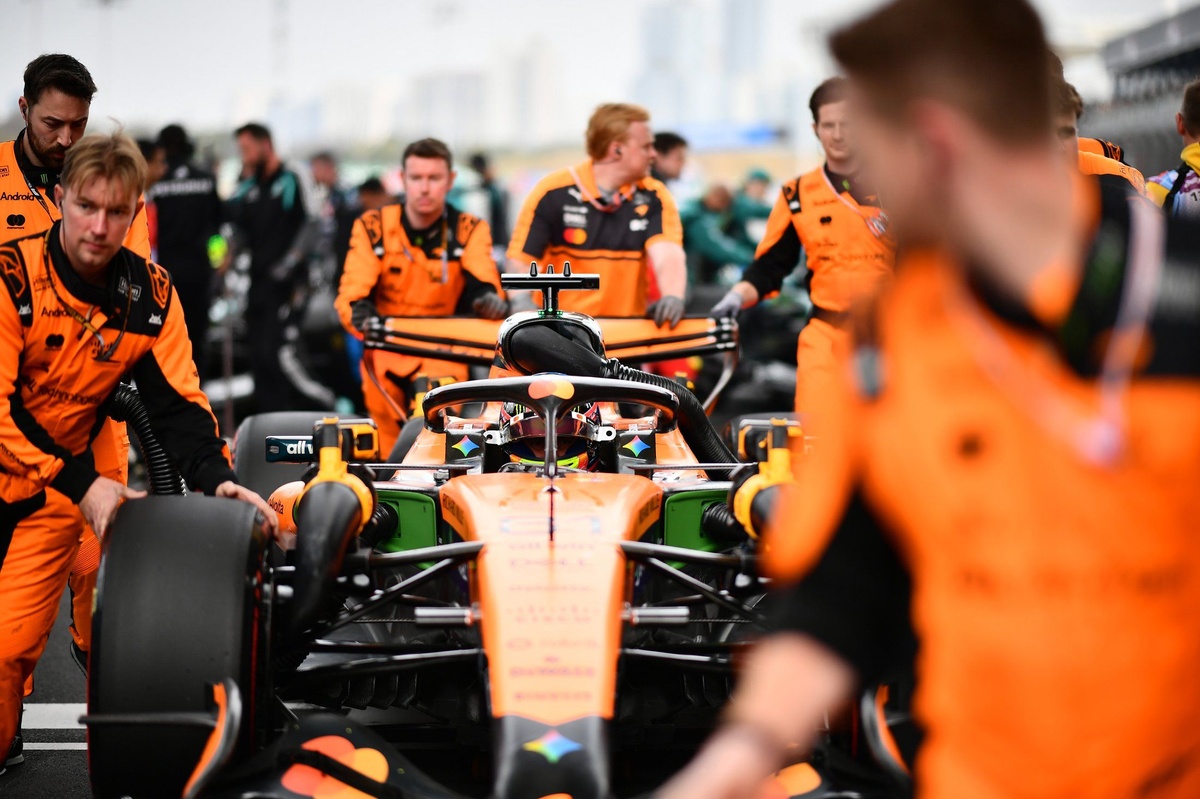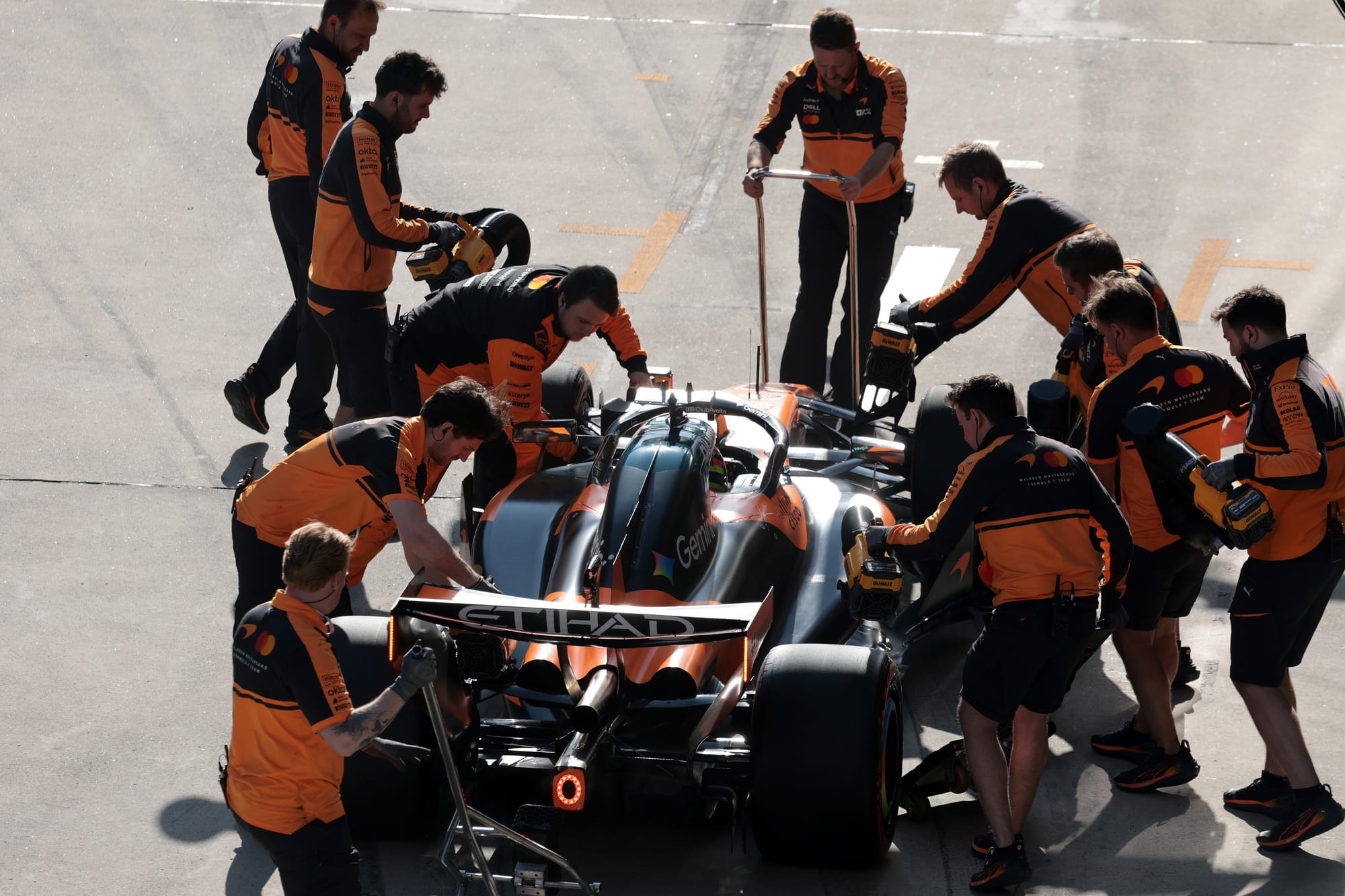
Formation lap, Chinese GP. Lando Norris pulls to the side, car dead. Two minutes later, Oscar Piastri follows suit. The defending World Champion and his teammate become the first double DNS of the 2026 season, their McLarens as lifeless as the hopes of anyone who backed them for another title.
This is how you transform a championship defence into a case study in competitive self-sabotage.
When Reliability Becomes Your Worst Enemy
McLaren entered 2026 with everything to prove and apparently nothing working. The regulations changed, the energy management systems evolved, and somehow the team that mastered the 2025 season found themselves mastered by basic electrical systems.
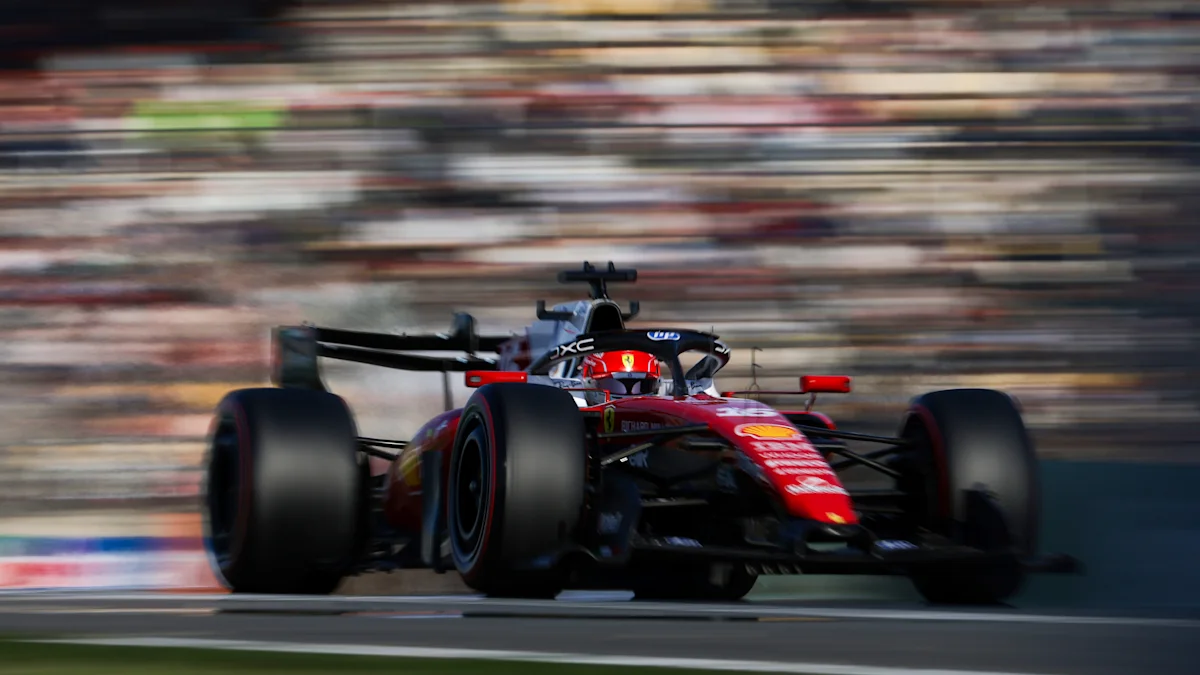
The Chinese GP debacle wasn’t just embarrassing — it was revealing. While Kimi Antonelli celebrated his maiden victory at 19 years old, becoming the second-youngest winner in F1 history, and Lewis Hamilton claimed his first Ferrari podium, McLaren’s garage resembled a very expensive morgue.
'We have no power. Complete electrical failure. This is not good.'
— Lando Norris, Chinese GP Formation Lap
The 2026 energy deployment regulations have caught everyone off guard, but McLaren seem particularly allergic to making their cars actually function. When your championship defence strategy hinges on the radical concept of “starting races,” you might want to reconsider your engineering priorities.
The Championship Mathematics of Disaster
Two races into the season, and McLaren have scored exactly zero points. Meanwhile, Mercedes have 43 points from their two drivers, Ferrari sit on 27, and even Oliver Bearman has outscored both McLaren drivers combined with his P5 at Shanghai.
The championship table makes for brutal reading if you’re wearing papaya. Antonelli leads on 25 points, Russell has 18, Hamilton sits third with 15, and Norris — the defending champion — languishes in joint-last with a big fat zero next to his name.
This isn’t just a slow start. This is watching a championship defence unravel in real time, one electrical failure at a time.
The Bigger Picture Problem
Here’s the thing that genuinely concerns anyone who appreciates what McLaren achieved last season: this feels systematic rather than circumstantial. The 2026 regulations demanded adaptation, and while teams like Mercedes have clearly nailed the energy management transition, McLaren appear to be fighting the same battles that plagued them in pre-season testing.
The technical directive changes around active aero elements were supposed to level the playing field. Instead, they’ve exposed which teams did their homework and which teams assumed their 2025 magic would simply carry over. McLaren, it seems, fell into the latter category.
When Andrea Stella talks about “learning opportunities” and “data gathering,” you know the situation has moved beyond optimistic spin into damage limitation territory. Championship-winning teams don’t gather data from the back of the grid — they gather points from the front of it.
Racing Towards Reality
The cruel irony is that McLaren’s 2025 title came from reliability as much as pace. They were the team that finished races while others faltered, the steady accumulator while Red Bull and Ferrari traded DNFs. Now they’ve become the cautionary tale they once exploited.
With Bahrain and Saudi Arabia cancelled due to regional conflicts, the season is compressed into 22 races. Every point matters more, every DNF hurts deeper, and every weekend spent watching from the sidelines becomes exponentially more costly.
McLaren built their championship on the foundation of being there when it mattered. Right now, they’re struggling with the basic requirement of being there at all. That’s not a slow start to a title defence — that’s a fundamental problem that threatens to define their entire 2026 campaign.
The season is young, but championship defences are fragile things. Ask any team that’s tried to repeat success in Formula 1: the sport has a way of humbling champions who forget that yesterday’s glory doesn’t guarantee tomorrow’s grid position.
Right now, McLaren are learning that lesson the hard way, one DNS at a time.