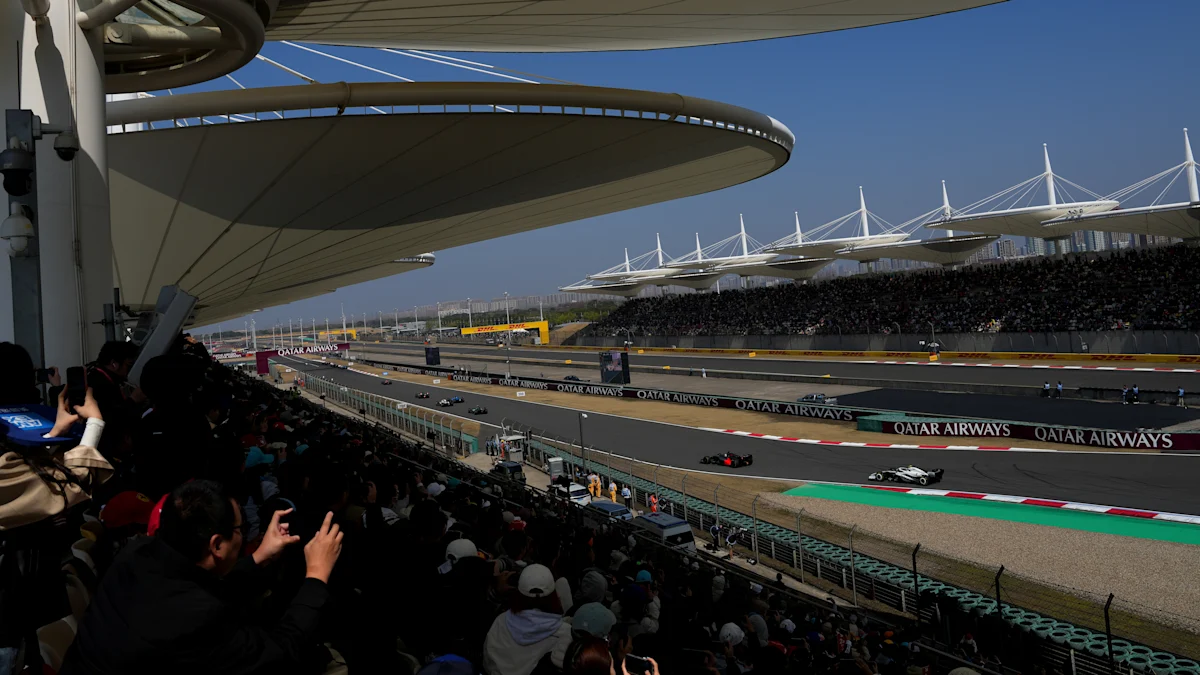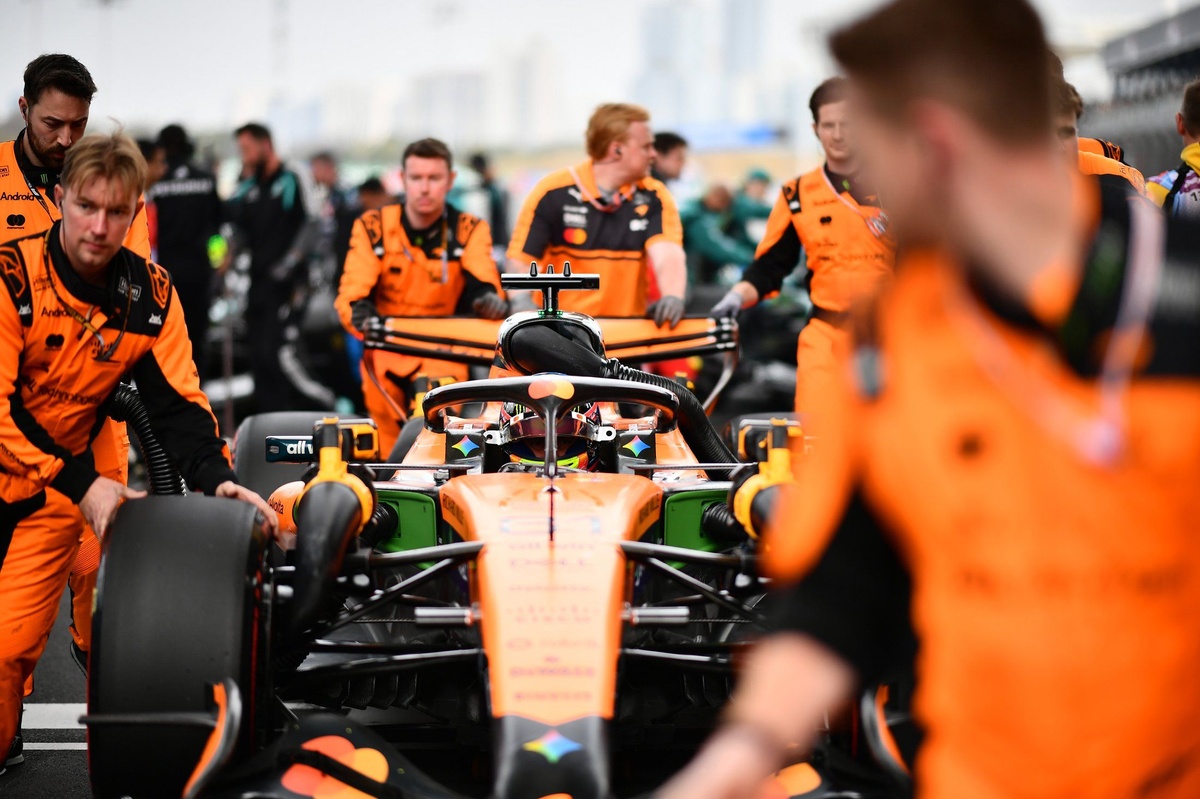
Three DNFs in two races. That’s McLaren’s championship defense by the numbers, and frankly, it’s hard to think of a more spectacular way to fumble a constructors’ title than what we’re witnessing from Woking right now.
The defending champions managed to get both cars to the finish line exactly zero times in China, courtesy of what they’re calling “electrical failures” — though given they apparently have no idea what actually went wrong, “mysterious car death syndrome” might be more accurate. The kicker? They’re now “entirely dependent” on Mercedes to figure out why their own cars stopped working.
When Your Engine Supplier Becomes Your Diagnostics Department
Here’s where it gets properly embarrassing for a team that was celebrating a constructors’ championship just four months ago. McLaren’s admission that they cannot investigate their China failures without Mercedes’ help reveals a dependency that goes far beyond the typical customer-supplier relationship.
The 2026 regulations introduced significant changes to energy management systems, with new restrictions on how teams can deploy and recover electrical energy. What’s becoming clear is that McLaren may have built their title-winning concept around energy management strategies that no longer work under the current rules — and worse, they apparently don’t understand their own systems well enough to diagnose failures independently.
'We are completely dependent on Mercedes for this investigation. Without their data and analysis, we cannot determine the root cause.'
— McLaren team source, post-China GP
This isn’t just about having Mercedes diagnose a power unit failure — that would be standard practice. This is about McLaren apparently lacking the technical capability to understand why their own electrical systems failed simultaneously on both cars. For a works-level operation that spent hundreds of millions developing their championship car, that’s genuinely shocking.
The Numbers Don’t Lie About This Collapse
Let’s put this in perspective: McLaren scored 666 points in 2025 to win the constructors’ championship. Through two races in 2026, they have scored zero points. Not a slow start — literally zero contribution to the championship fight they’re supposedly defending.
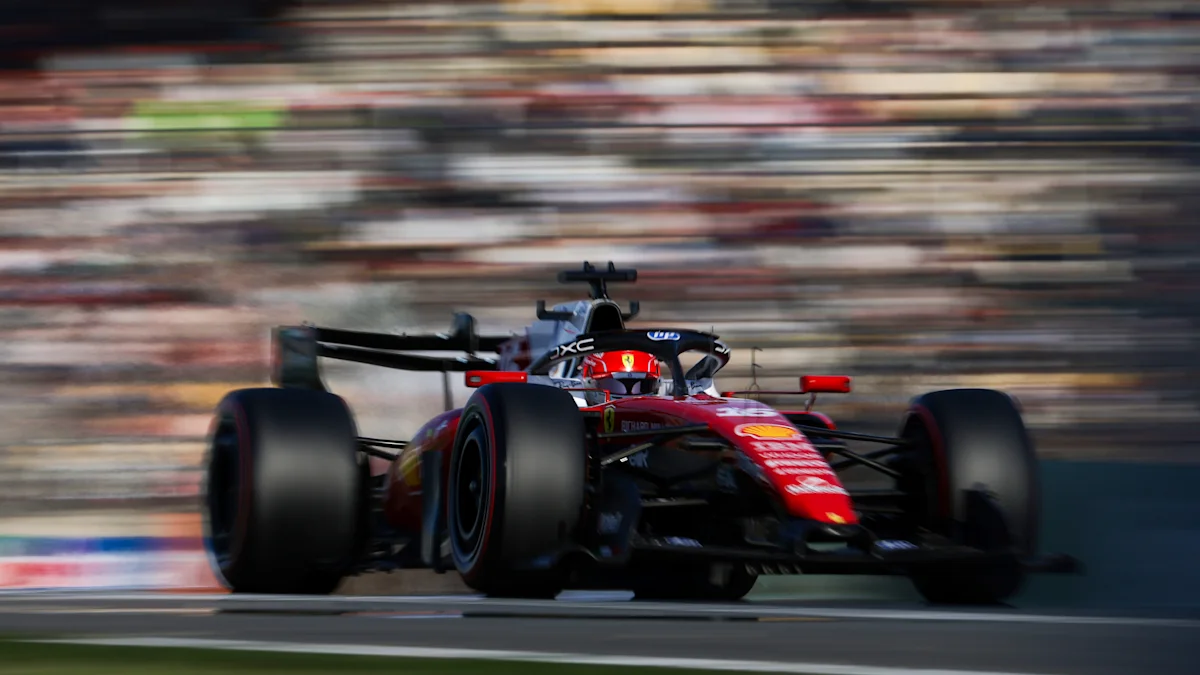
Compare that to the chaos around them: Max Verstappen retired from China but Red Bull still scored points with Pérez. Ferrari had their usual drama but got both cars home. Even Williams managed to finish both cars in the points in Australia. Meanwhile, McLaren has turned reliability into their Achilles’ heel precisely when the new regulations demand the most sophisticated energy management F1 has ever seen.
The timing couldn’t be worse, either. With Bahrain and Saudi Arabia cancelled due to Middle East conflicts, there’s now a five-week gap before the European season begins. That should be valuable development time, but how do you develop solutions when you can’t even diagnose the problems without calling your engine supplier for help?
A Rare Moment of Genuine Concern
Here’s the thing that genuinely worries me about McLaren’s situation: this isn’t just about early-season teething problems or bad luck. When a team that sophisticated admits complete dependency on an external supplier for basic failure analysis, it suggests fundamental gaps in their technical infrastructure that can’t be fixed with a few software updates.
The McLaren that won the 2025 constructors’ championship was built on exceptional aero efficiency and energy management. If the 2026 regulations have exposed that their energy systems were more Mercedes-dependent than anyone realized, they’re facing a much deeper problem than simple reliability issues. They may have won a championship while fundamentally misunderstanding their own car.
The Championship Reality Check
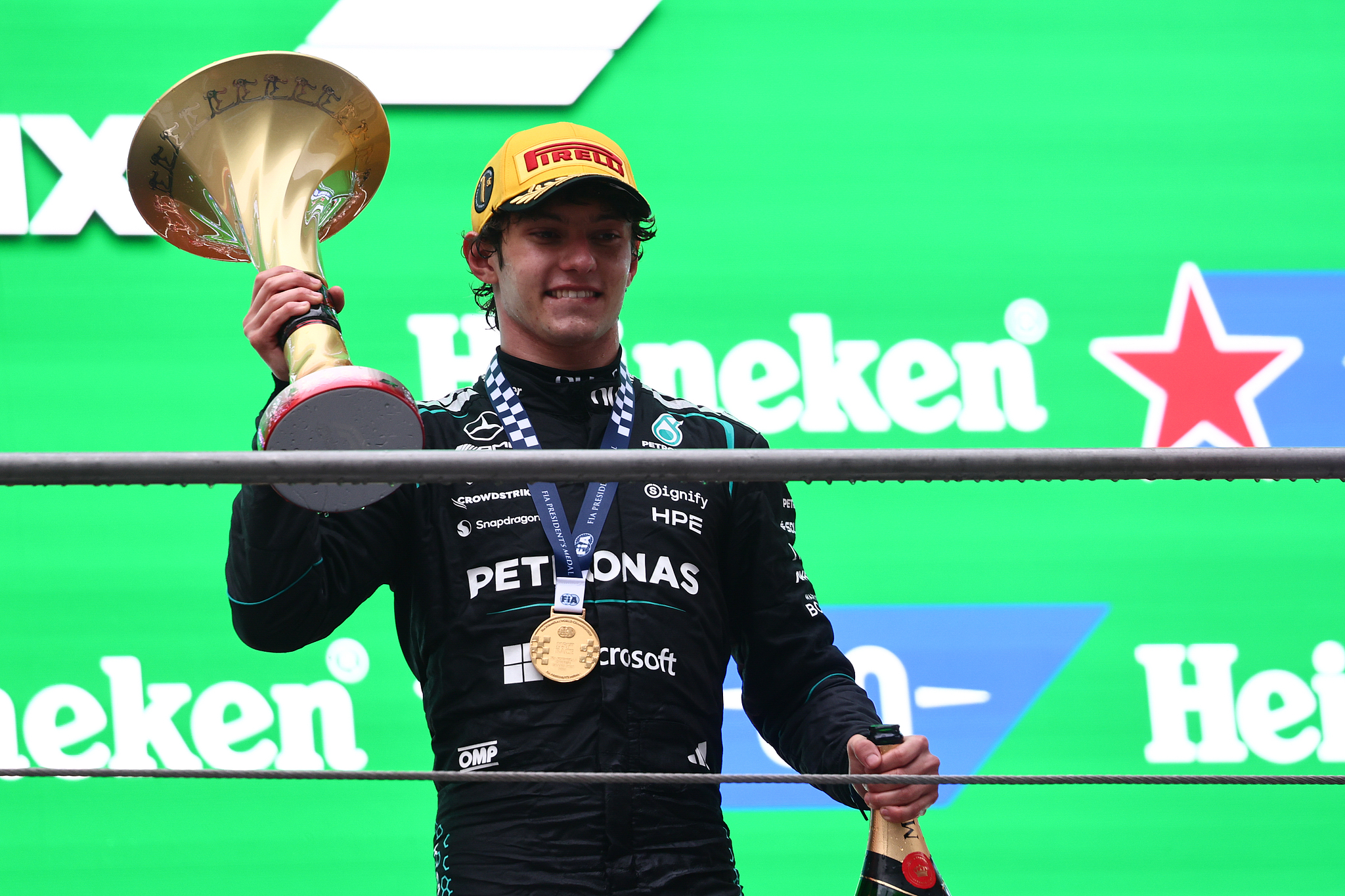
While McLaren fumbles around looking for answers, Kimi Antonelli just won his maiden F1 victory at 19 years old, and other teams are already adapting to the new regulations. The 2026 season was supposed to be McLaren’s chance to establish themselves as a sustained force rather than a one-hit wonder.
Instead, they’re providing a masterclass in how to waste a championship-winning foundation. Three DNFs in two races, zero points scored, and complete technical dependency on a supplier who probably has better things to do than explain to the defending champions why their cars don’t work anymore.
That’s not a championship defense. That’s a collapse in real time, with McLaren apparently as confused about it as the rest of us.