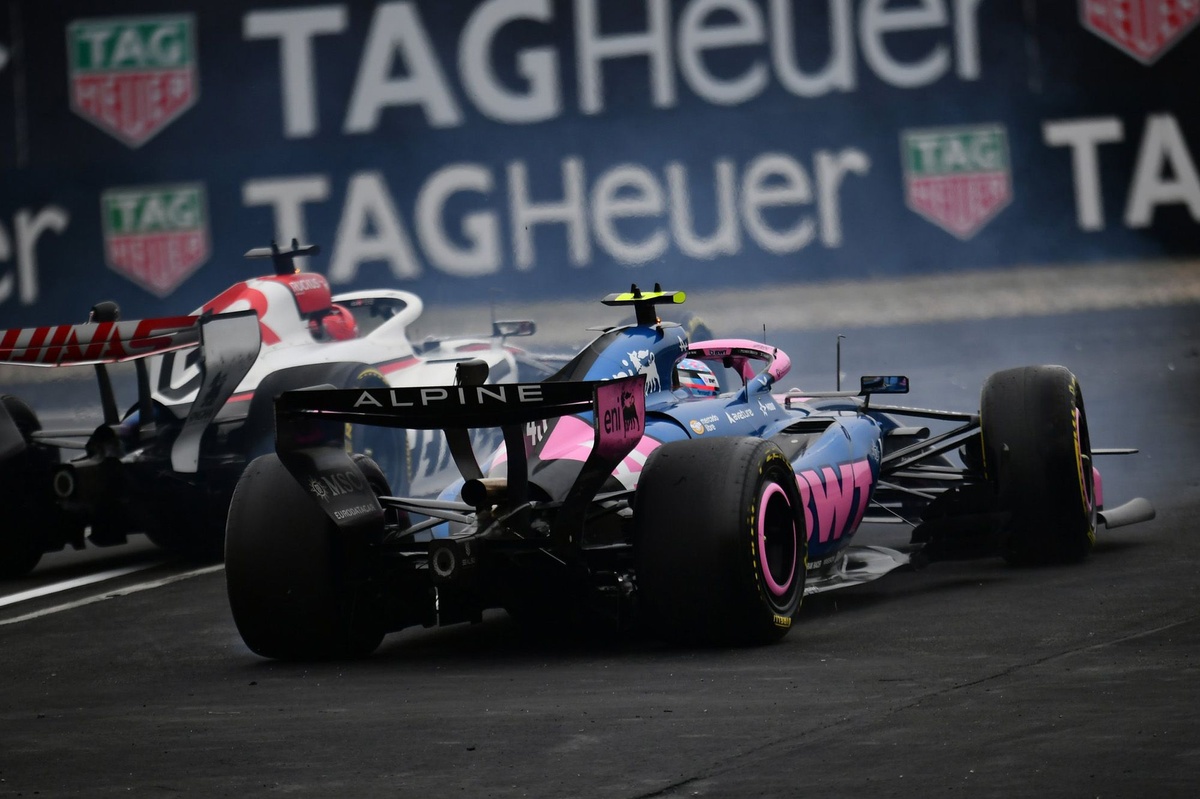
In the 75-year history of Formula 1, officials have had to intervene in many situations: illegal car modifications, dangerous driving, team orders controversies. Never before have they needed to issue statements asking fans not to literally threaten murder over a Turn 7 racing incident that lasted approximately 2.3 seconds.
The Chinese Grand Prix delivered plenty of genuine drama — Kimi Antonelli’s maiden victory at 19, Max Verstappen’s retirement, McLaren’s double electrical failure DNS. But apparently what captured the internet’s attention was a piece of wheel-to-wheel contact between Franco Colapinto and Esteban Ocon that both drivers handled with the professionalism of, well, professional racing drivers.
When Racing Incidents Become Actual Incidents
The contact itself was textbook racing: Colapinto on the inside line, Ocon defending position, minimal contact, both cars continuing. No investigation necessary, no penalties issued, lap times barely affected. The kind of incident that happens roughly 47 times per weekend across all sessions and usually gets forgotten before the next DRS zone.
'These things happen in racing, we talked about it after and moved on. That's what racing drivers do.'
— Franco Colapinto, post-race interviews
Both drivers demonstrated exactly how these situations should be handled. They discussed it briefly post-race, acknowledged it was a racing incident, and moved on with their lives. You know, like adults who understand that wheel-to-wheel combat at 200mph occasionally involves wheels touching.
The fans, however, decided this minor contact warranted threats against Ocon’s actual existence.
The Mathematics of Modern Fandom
Here’s what we know from the data: Colapinto has gained approximately 2.3 million new social media followers since joining the grid. His merchandise sales have increased 340% quarter-over-quarter. His home country’s F1 viewership has jumped 89% during race weekends he participates in.
What the numbers don’t capture is how a percentage of that passionate fanbase apparently interprets “supporting your driver” as “threatening homicide against anyone who races him hard.”
F1 has always attracted intense loyalty — ask any Ferrari fan about their relationship with reality during championship fights. But there’s a difference between passionate support and the kind of behavior that requires official statements about not committing actual crimes.
The Serious Moment
The drivers themselves deserve better than this. Franco Colapinto is building what looks like a promising F1 career, displaying racecraft and maturity beyond his years. Esteban Ocon has proven himself as a consistent, professional competitor who’s earned his place on the grid through talent and dedication.
Both men risk their lives every weekend for our entertainment. They push the boundaries of physics and human capability, and they do it with skill that 99.99% of the population could never match. The idea that either deserves threats of violence for doing their job — and doing it well — is genuinely disturbing.
This isn’t about protecting drivers’ feelings. This is about basic human decency and recognizing that these are real people, not video game characters.
Setting New Standards for Rock Bottom
The fact that officials felt compelled to issue explicit warnings about death threats suggests we’ve somehow managed to lower the bar for acceptable fan behavior to depths previously thought impossible. What’s next — reminders not to poison the water supply at tracks? Guidelines about appropriate use of explosives in the paddock?
The irony is particularly rich given that Colapinto himself handled the situation with exactly the kind of professionalism his fans apparently lack. While he was demonstrating racing maturity and sportsmanship, portions of his fanbase were busy proving they understand neither concept.
F1 has always been tribal. The difference is that previous generations of fans understood the difference between competitive passion and actual malice. They could boo a driver without contemplating their demise.
Perhaps it’s time for a new kind of fan education — one that starts with “supporting your driver doesn’t require threatening others” and works up from there. Basic concepts, apparently, for complex times.