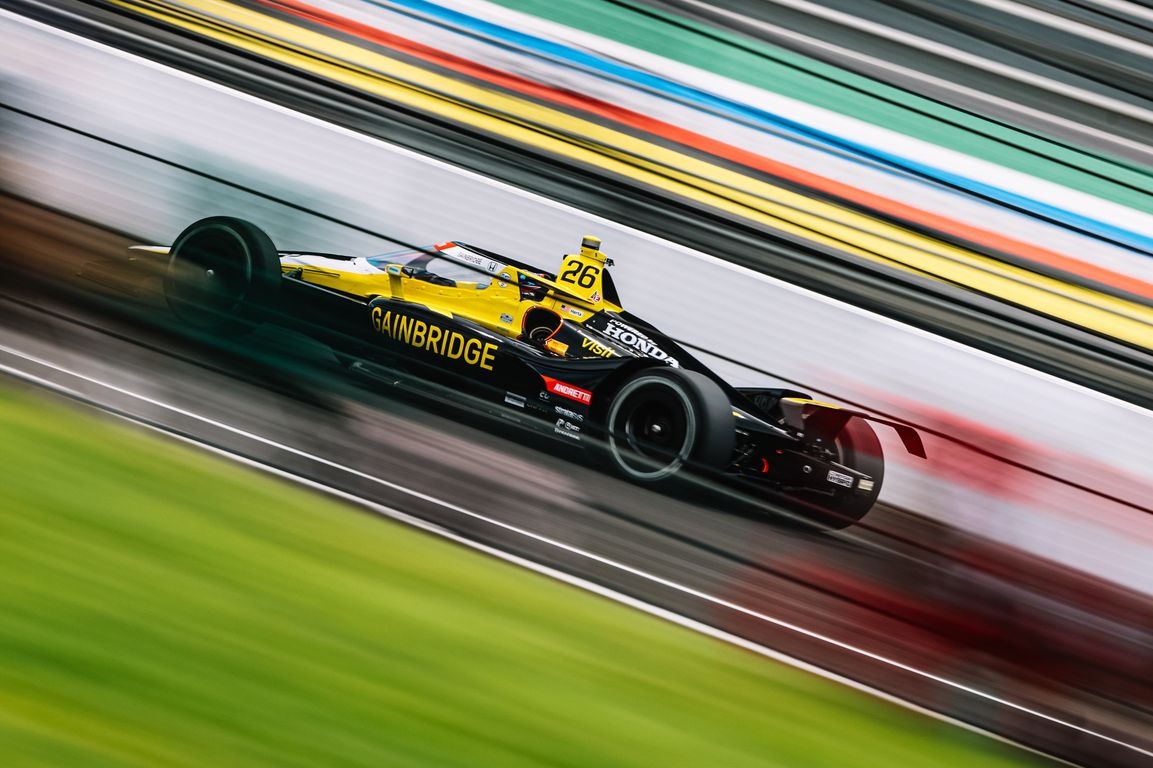
Marco Andretti has hung up his helmet, and suddenly Andretti Global finds itself staring at an empty fourth garage bay for the Indianapolis 500. After five consecutive years of running Marco as their one-off May special, the team is now contemplating whether to fill that spot for the 110th Running of the Greatest Spectacle in Racing. Meanwhile, somewhere in Liberty Media’s offices, executives are probably wondering why they keep saying no to a racing dynasty that actually knows how to put on a show.
The irony is thicker than the humidity at IMS in May. Here’s Andretti Global, systematically building one of IndyCar’s most formidable operations, adding entries and winning races while F1 continues its elaborate pantomime of “we’re not sure if there’s room for you.” It’s like watching someone get rejected by an exclusive nightclub while they’re already throwing the best party down the street.
The Marco Era Ends, The Questions Begin
Marco Andretti’s retirement announcement this offseason closed a chapter that began with genuine promise but ultimately became a study in what happens when raw speed meets the brutal mathematics of oval racing. His one-off appearances since stepping back from full-time competition became an annual tradition – part family obligation, part marketing exercise, part “let’s see if the old magic is still there.”
The results were mixed, which is diplomatic speak for “occasionally brilliant, frequently frustrating.” But Marco’s retirement creates a genuine strategic question for Andretti Global: do you maintain the four-car operation that has become your Indianapolis calling card, or do you consolidate resources into three entries with maximum support?
'We've got the infrastructure, we've got the data from running four cars, and we've proven we can execute at this level. The question is whether we can find the right driver to maximize that fourth entry.'
— Andretti strategist, contemplating the math
The F1 Rejection That Keeps On Giving
Let’s address the elephant in the paddock: while F1 continues its performance art piece titled “We Don’t Need More American Teams,” Andretti Global is actually demonstrating what American motorsport excellence looks like. They’re not just participating in IndyCar – they’re elevating it. Four competitive entries at Indianapolis isn’t just about having more cars on track; it’s about data sharing, setup development, and the kind of technical depth that makes everyone faster.
The technical advantages of running multiple entries at Indianapolis are substantial. Tire degradation patterns across different fuel loads, aerodynamic balance adjustments for varying track conditions, and race strategy optimization all benefit from having more data points. When you’re dealing with 230+ mph speeds and the margin for error measured in milliseconds, every additional car becomes a valuable sensor in your performance matrix.
The Real American Racing Renaissance
While Formula 1 debates whether there’s “room” for American involvement, IndyCar is quietly experiencing a renaissance that makes F1’s recent growth look pedestrian. The racing is closer, the technology is relevant, and the spectacle is genuine. Andretti Global’s success isn’t just about one team doing well – it’s about proving that American racing can operate at the highest technical and competitive levels without needing approval from European gatekeepers.
The Indianapolis 500 remains the single largest single-day sporting event in the world, and Andretti Global’s potential fourth entry represents more than just another car. It’s a statement about commitment to excellence and a refusal to be limited by artificial barriers created by sanctioning bodies more concerned with protecting existing interests than promoting actual competition.
'We don't need anyone's permission to be excellent at what we do.'
— Michael Andretti, channeling generational racing DNA
The Verdict: Excellence Doesn’t Need Permission
Andretti Global’s decision on a fourth Indianapolis 500 entry will ultimately come down to whether they can identify a driver capable of maximizing the opportunity. But the broader narrative is clear: while F1 continues its elaborate gatekeeping exercise, American racing is thriving with innovation, competition, and genuine spectacle.
The 110th Running of the Indianapolis 500 will happen with or without that fourth Andretti entry, but the symbolism matters. Every successful season, every competitive showing, every demonstration of technical excellence is another data point proving that F1’s rejection of Andretti wasn’t about capability – it was about protectionism.
Liberty Media can keep watching from the sidelines while Andretti Global continues building racing excellence one oval at a time. Sometimes the best response to rejection is simply being undeniably better than those who rejected you.