The FIA’s single seater director Nikolas Tombazis has just confirmed what every F1 fan with functioning eyeballs already knew: the sport’s revolutionary new energy management regulations might need a tiny bit of tweaking. You know, the same way the Titanic needed a tiny bit of ice removal.
After three races of watching drivers manage their energy deployment like accountants calculating quarterly budgets instead of gladiators battling for glory, Tombazis has graciously announced that F1’s governing body will conduct a “comprehensive review” of the rules following the Chinese Grand Prix. Because nothing says “we’ve got this under control” quite like admitting your masterpiece needs emergency surgery after just three rounds.
The Great Energy Experiment Goes Horribly Right
Let’s be absolutely clear about what these energy management rules were supposed to achieve. The FIA, in their infinite wisdom, decided that Formula 1 needed more strategic complexity around hybrid power deployment. Drivers now have to manually manage their ERS-K and ERS-H systems across multiple deployment modes, with strict limits on energy recovery per lap and complex penalty structures for exceeding allocation windows.
The theory was sound: create more strategic variability, reward driver skill in energy management, and add another layer of tactical complexity for teams to navigate. What they actually created was a regulation so Byzantine that even the engineers need flowcharts to explain it to their own drivers.
'These energy rules are like asking us to race with one hand tied behind our backs while solving calculus'
— Anonymous Driver, Post-Race Debrief
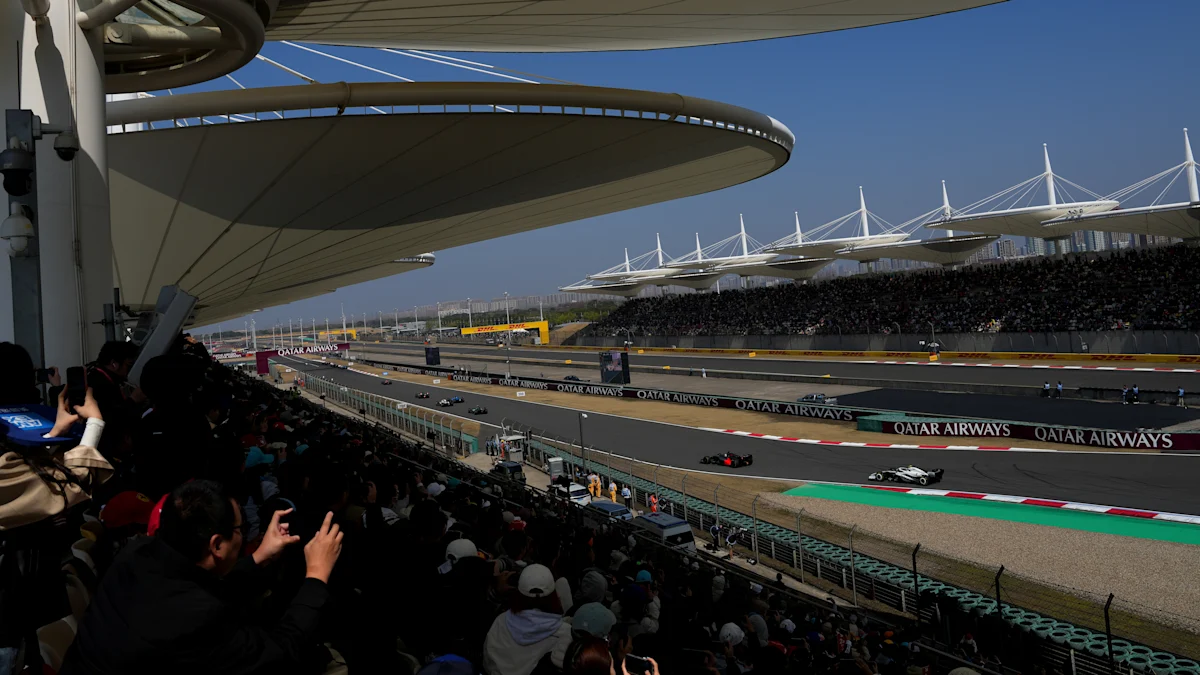
The Chinese Grand Prix was apparently the final straw. Watching drivers lift and coast through the Shanghai International Circuit’s flowing corners while frantically calculating energy budgets created the kind of spectacle that makes watching paint dry seem thrilling by comparison. When your premier motorsport category starts resembling a fuel economy run, perhaps it’s time to reconsider your approach.
Strategic Complexity vs. Racing Entertainment
Here’s the technical reality that the FIA seems to have overlooked: F1 already had perfectly functional energy management systems. The previous ERS regulations allowed for tactical deployment without turning every lap into a mathematical exercise. Drivers could push when they needed to, harvest when they could, and the strategic elements emerged naturally from race circumstances rather than regulatory mandates.
The new system requires drivers to manually select from five different energy deployment modes, each with specific power output curves and recovery limitations. Mode 1 provides maximum deployment but limits recovery to 1.2MJ per lap. Mode 3 offers balanced deployment with 1.6MJ recovery windows. Mode 5 prioritizes energy harvesting but caps deployment at 120kW instead of the full 160kW available in other modes.
It’s the kind of complexity that makes sense in a boardroom presentation but falls apart when drivers are trying to race wheel-to-wheel at 300 kilometers per hour. The cognitive load is immense, the strategic benefits are marginal, and the entertainment value has plummeted faster than Ferrari’s championship hopes in 2022.
Tombazis Promises Solutions, Fans Remain Skeptical
Tombazis, to his credit, hasn’t tried to defend the indefensible. His admission that the regulations need review suggests the FIA is at least capable of reading the room, even if it takes them three races and a minor fan revolt to do so. The review will apparently focus on “simplifying driver interfaces while maintaining strategic depth” – translation: they’re going to try to fix their overcomplicated mess without admitting it was an overcomplicated mess.
'We are checking the energy deployment parameters... still checking... okay, we think we know what we're doing now'
— Every Race Engineer, Every Lap
The timing is particularly awkward given that teams have spent millions developing systems around these regulations. Red Bull’s energy management algorithms are reportedly so sophisticated they’ve hired former NASA engineers. Mercedes has completely redesigned their steering wheel interface. Ferrari has… well, Ferrari has found new and creative ways to make strategic errors, but that’s hardly news.
The Verdict: Better Late Than Never
Credit where it’s due: the FIA recognizing they’ve created a problem and promising to fix it is progress. The fact that it took a near-universal backlash from drivers, teams, and fans to reach this conclusion is less encouraging, but we’ll take what we can get.
The energy management concept isn’t fundamentally flawed – F1’s hybrid systems can and should be part of the strategic equation. But turning every lap into a spreadsheet calculation isn’t the answer. The sport needs regulations that enhance racing, not replace it with mathematical optimization exercises.
Tombazis has promised changes before the European season begins. For F1’s sake, let’s hope they get it right this time. Because if there’s one thing worse than admitting your revolutionary new rules don’t work, it’s having to admit it twice.