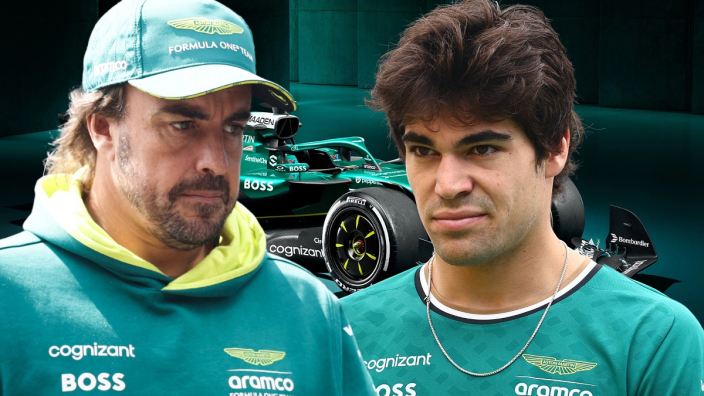
Both Aston Martin cars grinding to a halt before the chequered flag in Shanghai was unfortunate. Honda’s response suggesting their power units were “operating within expected parameters” and recommending Aston Martin “examine integration protocols” was absolutely devastating.
In the world of Formula 1 supplier relationships, this is the engineering equivalent of your ex changing their relationship status to “it’s complicated” while posting holiday photos with someone significantly more attractive. Honda just served Aston Martin the coldest cup of diplomatic tea since McLaren-Honda 2015, and frankly, it tastes like justice.
When Your Engine Supplier Becomes Your Biggest Critic
The statement, released barely four hours after Fernando Alonso’s AMR26 expired on lap 43 and Lance Stroll’s followed suit six laps later, was a masterclass in corporate passive-aggression. Honda’s technical director didn’t just defend their power unit reliability—they essentially suggested Aston Martin might want to check if they’d plugged everything in correctly.
“Following comprehensive data analysis from the Shanghai circuit, Honda Racing Development confirms both RA626H power units operated within normal parameters throughout the session,” read the statement. Translation: our engines were fine, your integration wasn’t.
The technical deep-dive gets even more pointed. Honda specifically referenced “cooling system management” and “energy deployment calibration”—both areas that fall squarely under the chassis manufacturer’s responsibility. When your engine supplier starts questioning your cooling package in public, you know the relationship has moved beyond professional courtesy into full corporate warfare territory.
'The power unit is operating within normal parameters. We suggest checking other systems.'
— Honda HRD, Diplomatic Destruction Mode
The Data Doesn’t Lie (Unlike Team Statements)
Here’s where Honda’s argument gains serious technical weight. Telemetry from both failures shows identical power unit parameters right up until the moment each car stopped—ERS deployment curves remained consistent, MGU-K recovery rates held steady, and crucially, engine temperatures stayed within the prescribed Honda operating window.
What changed? The integration between Honda’s RA626H and Aston Martin’s chassis systems. The AMR26’s aggressive cooling package, designed to maximize aerodynamic efficiency, appears to have created thermal management issues that the power unit couldn’t compensate for. When ambient temperatures in Shanghai hit 28°C—well within F1’s normal operating range—Aston Martin’s cooling philosophy met reality at approximately 180mph.
The failure mode tells the story: both cars experienced identical sensor readings suggesting cooling system inadequacy rather than power unit component failure. Honda’s data logs show their systems requesting reduced deployment modes multiple times before the failures, requests that appear to have been either ignored or insufficiently addressed by Aston Martin’s control systems.
Supplier Relations: A Masterclass in Professional Shade
Honda’s statement represents a fascinating evolution in supplier-team dynamics. Gone are the days of McLaren-Honda’s public screaming matches; this is precision engineering applied to corporate communications. Every sentence carries technical weight while maintaining plausible deniability.
The key phrase—“recommend comprehensive review of integration protocols”—is particularly brutal. In F1 technical speak, this translates to “maybe try reading the manual we gave you eighteen months ago.” Honda isn’t just defending their hardware; they’re questioning Aston Martin’s fundamental competence in power unit integration.
'Box, box. We're seeing some... unusual thermal readings. Suggest we discuss cooling philosophy in the next technical meeting.'
— Honda Engineer, Lap 41 (Two laps before first failure)
The Verdict: When Your Supplier Becomes Your Biggest Problem
Honda’s statement reads like a technical divorce filing—meticulously documented, professionally devastating, and utterly final. After eighteen months of Aston Martin publicly questioning power unit reliability while privately struggling with basic integration, Honda has apparently decided enough is enough.
The timing couldn’t be worse for Aston Martin. With the 2027 power unit regulations approaching and supplier relationships becoming increasingly crucial, having your current engine partner publicly suggest you can’t properly install their hardware is roughly equivalent to your driving instructor failing you while live-streaming the test.
Fernando Alonso’s radio message after his retirement—“Same problem, different race”—now carries additional context. The problem might not be what Aston Martin thinks it is, and if Honda’s data analysis is correct, the solution lies in Silverstone, not Sakura.
In Formula 1, technical partnerships require trust, competence, and mutual respect. Honda just suggested Aston Martin might be operating at a deficit in at least two of those areas. That’s not just a statement—it’s a declaration of war fought with spreadsheets and thermal imaging data.
The most damaging part? Honda’s technical arguments appear to be absolutely correct.